How to Wash Produce Safely for Plate Sales
Build a safer produce-washing workflow with a clean station, running water, package checks, raw-food separation, drying, and cold storage.
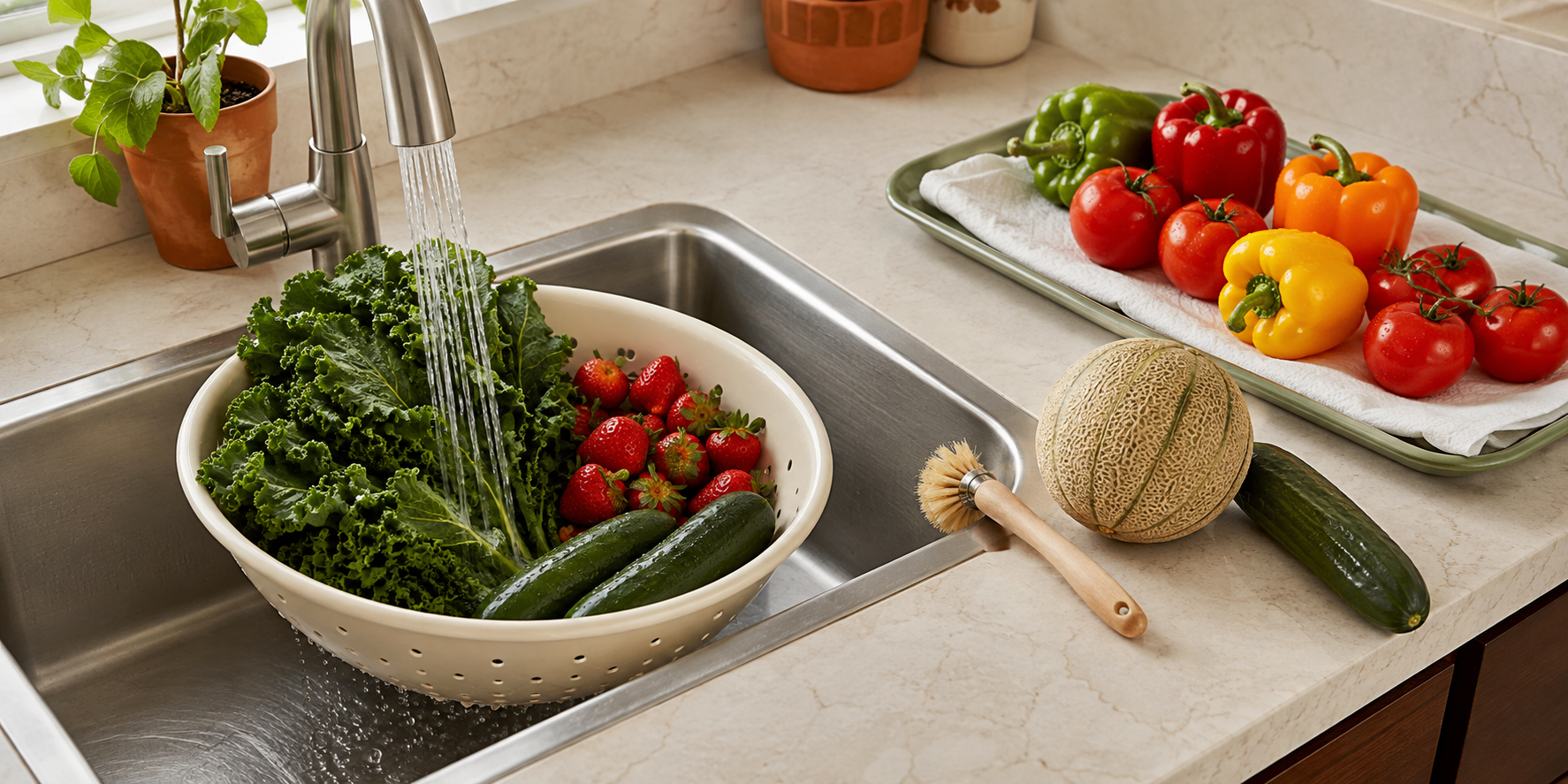
A box of clean-looking lettuce can still carry contamination, and a rushed rinse can create new problems if the sink just held raw chicken or washed produce returns to a dirty container. Produce washing needs to be a defined preparation step—not something squeezed between shopping and chopping.
This guide will help you release produce from storage, prepare a dedicated station, follow the package direction, wash different types under running water, dry them, and move the finished batch into the next controlled step. The result is a repeatable workflow for salads, slaws, garnishes, fruit cups, and vegetables that will be cooked.
Your product, water source, kitchen, and jurisdiction determine which rules apply. The FDA Food Code is a model used by food regulators, not one law adopted identically everywhere. Confirm the current produce, sink, potable-water, storage, labeling, and home-food requirements with the authority responsible for your operation.
Release the produce before washing it
Start with the accepted ingredient and its identity. Check the item against the menu and supplier record, then inspect it again in good light. Set aside produce that is rotten, leaking, moldy, or connected to a recall. Cut away bruised or damaged areas only when current guidance and your procedure allow the rest to be used; do not trim decay into an acceptable batch.
The FDA advises choosing produce without bruising or damage and keeping pre-cut or packaged produce refrigerated. Build those checks into the food-delivery receiving workflow so a failed item never reaches the wash station simply because prep has started.
Before discarding a supplier label, record the item, supplier, receipt date, available lot details, and menu batch. If a recall or customer concern appears later, “the green peppers from the grocery store” is not enough to reconstruct what happened.
Wash the quantity the production plan needs. Washing an entire case early can add handling and moisture while shortening quality life. University of Minnesota Extension recommends waiting to wash most produce until it is ready to be prepared or eaten. Match the batch to paid orders and the timing in your plate-sale production schedule.
Build a produce-only station
Do not assume a sink is clean because water runs through it. Remove dirty dishes and raw-food packages. Clean and, where required, sanitize the sink, faucet controls, counter, colander, produce brush, board, knife, trays, and containers.
The current University of Minnesota Extension produce-washing guide starts with clean hands and a cleaned and sanitized sink, faucet, and counter. Connect that setup to your cleaning and sanitizing schedule instead of reusing a towel or sponge from another task.
Keep raw meat, poultry, seafood, eggs, their packages, and utensils away from the station. USDA FSIS explains that washing raw meat or poultry can spread bacteria to the sink, counter, utensils, and other food. Washing raw poultry is not a food-safety control and creates splash risk around ready-to-eat produce.
Set the work in one direction:
- Unwashed produce waits in its original or identified cleanable container.
- Produce moves to the sink or colander for washing.
- Washed produce moves to a clean draining or drying area.
- Dry produce moves to a clean board for trimming and cutting.
- The finished batch goes directly into cooking, assembly, or protected cold storage.
Do not send washed produce backward into the field carton, shopping bag, or unwashed holding bin.
Read the package before adding water
Not every bag belongs in the sink. First decide which of these instructions controls the item:
- Whole or bulk produce: Wash it under running potable water before cutting, peeling, cooking, or serving.
- Labeled pre-washed, triple-washed, or ready-to-eat produce: Follow the package direction; do not automatically wash it again.
- Produce requiring a special approved process: Follow the current regulator-approved procedure and product directions rather than inventing a chemical treatment.
FDA says packaged items labeled pre-washed or ready-to-eat can be used without further washing. Rewashing creates another set of hands, surfaces, utensils, and splash points to control.
Keep the package identity with the production record. If it is open, torn, warm when it should be refrigerated, beyond the accepted date, or otherwise questionable, use the receiving decision. Water cannot turn a rejected package into an acceptable ingredient.
Wash under running water, not in a recipe of chemicals
Use clean running water, work gently, and let it drain away. The FDA’s produce-handling guidance says to wash produce before preparing it, including items whose peel will not be eaten, because cutting can carry material from the surface into the food.
Use the method that fits the product:
- Gently rub smooth produce such as peppers, tomatoes, and apples under running water.
- Turn leafy greens and remove the outer leaves your procedure identifies, allowing water to reach the usable leaves without crushing them.
- Hold berries, herbs, and other delicate items in a clean colander and use a gentle spray so they drain rather than sit in a shared bath.
- Scrub firm produce such as melons or cucumbers with a clean produce brush, then clean and sanitize the brush under your equipment procedure.
- Rinse produce before peeling or cutting, not after the knife has already crossed the unwashed surface.
Avoid soaking multiple batches in one basin of standing water. Soil and contamination released by one item can move through the shared water, while delicate produce can be damaged. If your approved operation uses a specialized commercial wash, it needs the correct food-use approval, concentration control, and regulator acceptance; that is not permission to improvise a household mixture.
Keep soap, bleach, and promises out of the wash
Soap belongs on hands and appropriate equipment, not on fruits and vegetables. FDA advises against washing produce with soap, detergent, or commercial produce wash and explains that porous produce can absorb residues. Minnesota Extension is equally direct that soap, detergent, and bleach solutions should not be used to wash produce.
Do not substitute vinegar, baking soda, lemon juice, or a homemade mixture for an approved process. A seller should be able to name the authority and exact procedure behind any chemical that directly contacts food.
Also avoid saying that washing “kills all germs” or makes produce sterile. FDA states that washing can reduce bacteria but does not eliminate it. Washing will not reverse spoilage, remove every hazard, make a recalled product saleable, or make raw sprouts suitable for every customer. Keep the promise narrow: the batch was handled under the documented wash-and-prep procedure.
Dry, cut, and protect the finished batch
Move washed produce to a clean tray, rack, salad spinner, or disposable towel allowed by your procedure. Drying removes surface moisture and helps keep the next board and storage container from becoming a puddle. Do not wipe it with an apron, service towel, or cloth used on the counter.
Once cutting begins, keep the produce on clean equipment and away from raw-food work. CDC’s current food-poisoning prevention guidance calls for running-water rinsing and separation from raw animal foods, including a separate cutting board for produce and other foods that will not be cooked.
Move the prepared batch into its next control without an unplanned wait:
- Use it immediately in the scheduled cooking step.
- Assemble it into a protected ready-to-eat item with clean utensils.
- Cover, identify, and move it promptly into the required cold storage.
Temperature, date marking, and holding limits depend on the product and governing rule. Use the refrigerator organization and capacity system so washed and cut produce has a protected shelf, clear identity, and enough cold space.
Work through one produce batch
Imagine a seller needs slaw and fruit cups for 18 paid orders. The release record identifies one head of cabbage, six carrots, and three packages of strawberries. The seller checks the packages and labels, confirms the strawberries are not marked pre-washed, and stages only the quantity in the tested recipes.
The schedule could read:
| Step | Control | Release decision |
|---|---|---|
| Station setup | Hands, sink, faucet, colanders, brush, boards, knives, trays, and containers are ready | Start washing |
| Firm produce | Cabbage and carrots are washed under running water; approved outer leaves are removed | Move to clean drying tray |
| Delicate produce | Strawberries are gently rinsed in a separate clean colander and drained | Move to separate clean tray |
| Cutting | Slaw vegetables and fruit use clean tools and remain separated from raw-food work | Assemble the verified quantity |
| Storage | Containers are covered, identified, and moved into their assigned cold zone | Release to the packing schedule |
That is an example workflow, not a universal washing or storage rule. If raw chicken prep is still active beside the sink, the faucet loses potable water, a colander falls on the floor, or the cold zone is full, the batch pauses. Correct the condition and repeat the affected setup step instead of working around it.
Run a seven-point produce check
Before the next menu drop, confirm:
- Permission: The produce, process, water, kitchen, and storage meet current local requirements.
- Identity: Supplier, package, receipt, and menu-batch details remain traceable.
- Station: Hands, sink, faucet, counter, tools, and clean drying space are ready.
- Separation: Raw animal food, dirty packaging, and contaminated tools are outside the produce flow.
- Direction: The package instruction decides whether the item is washed or used as ready-to-eat.
- Method: Running water, gentle handling, a clean firm-produce brush, and no improvised chemicals fit the item.
- Next step: Washed produce moves forward into cooking, assembly, or protected cold storage without an uncontrolled wait.
Start with the produce used in your highest-volume menu item. Draw its path from accepted package to finished batch, then remove every point where washed food can meet an unclean hand, surface, container, or delay. The Selling Plates guide can help connect that produce workflow to the menu, pricing, orders, and sale-day plan around it.
Ready to move?
Turn the research phase into your first sale.
The guide brings pricing, menu planning, marketing, and setup into one clear playbook.
Get the guide on Gumroad