How to Test a New Menu Item Before a Plate Sale
Test a new menu item with local customers using a small tasting, neutral feedback, a realistic price, and a paid pilot before adding it to your menu.
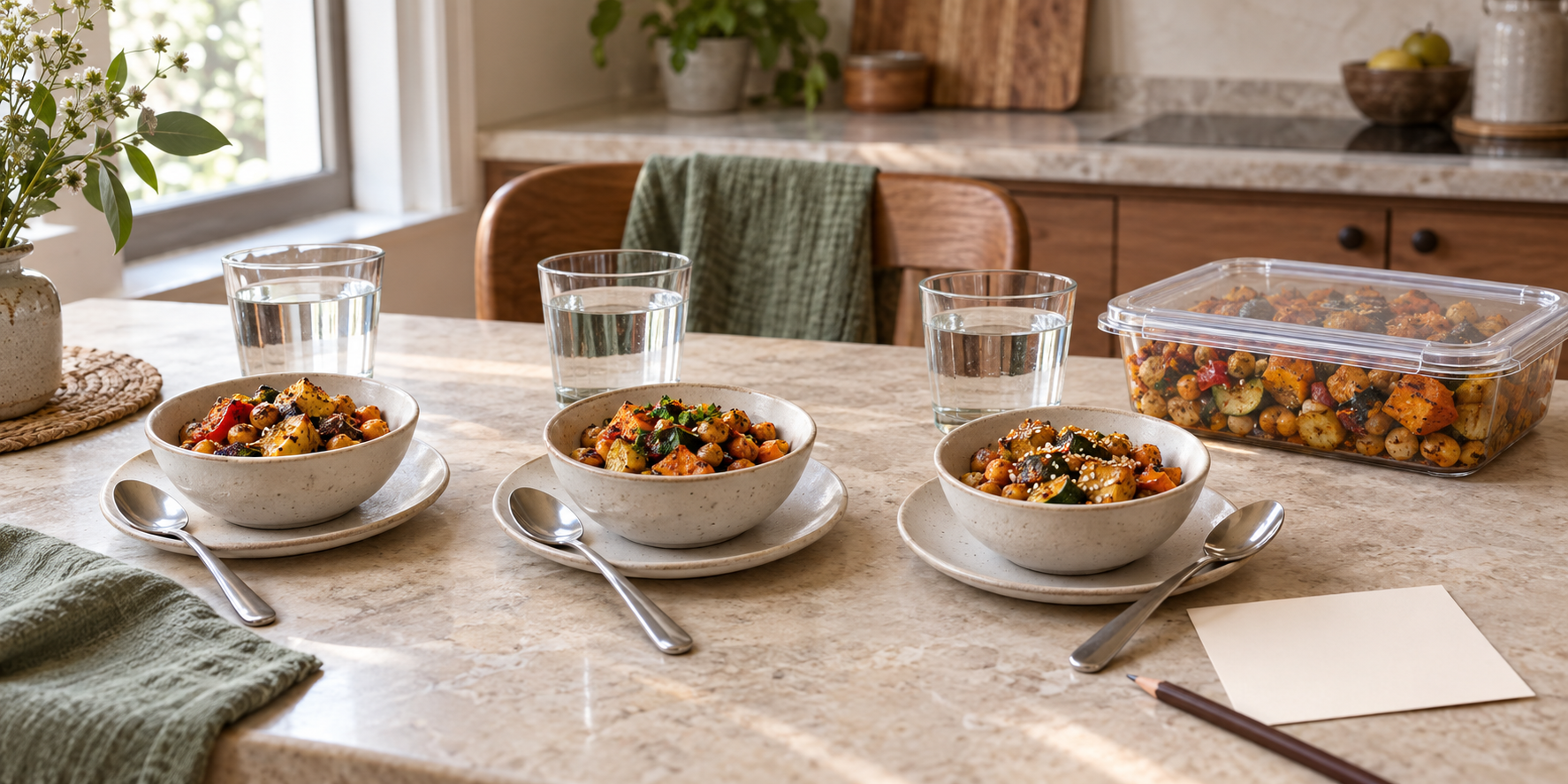
“You should sell this” is encouraging, but it leaves several questions unanswered. Would that person buy the full portion at your actual price? Does the dish still taste good after the normal trip home? Can you make it without disrupting the menu customers already order?
Before adding a new item to a full plate sale, run a small, focused customer test. This workflow helps you define the offer, collect useful taste feedback, and decide whether to revise the dish, try a limited paid sale, or leave it off the menu. It is a practical learning exercise, not a scientific forecast of your local market.
Define the customer and one test question
Start with the person and occasion the dish is meant to serve. “Everyone who likes good food” gives you little direction. “Nearby customers who buy Friday pickup dinners and want a meatless main” tells you whom to invite and what the plate needs to do.
Penn State Extension’s food-product marketing guidance recommends understanding both the product and the people willing to buy it before choosing a selling place, price, and promotion. Apply that principle to one proposed offer: dish, full portion, included sides, expected price, and pickup arrangement.
Then choose one question for the first test. Examples include whether the seasoning fits your regular customers or whether the vegetable main feels substantial enough for dinner. Avoid changing the recipe, portion, price, and pickup day together; you will struggle to identify what caused the response.
Write a short test brief:
- Intended customer and meal occasion
- Recipe version and proposed full plate
- Main question the tasting should answer
- Maximum food, packaging, and time budget
- Evidence needed before a paid pilot
Keep this record even if you decide against the dish. It prevents the same untested idea from returning every few weeks.
Recruit people who could actually buy the offer
Invite a mix of existing customers and prospective customers who fit the brief and can use your real pickup location and schedule. Family feedback can help identify obvious problems, but keep it separate from responses from likely buyers.
The SBA’s market-research guidance includes demand, location, competing alternatives, and pricing among the questions to investigate. It also identifies questionnaires and interviews as direct research methods. A tasting should answer those business questions alongside “does this taste good?”
Explain that honest criticism is welcome and participation creates no obligation to buy or post a review. Ask whether the person normally eats this type of dish and buys prepared meals. Someone who never purchases pickup dinners may offer useful recipe comments without being a suitable demand signal.
Choose a group you can serve safely and affordably. There is no magic participant count in this workflow. A small convenience group can reveal a recurring issue; it cannot establish what percentage of your town will order.
Release the tasting before inviting anyone
For US home-food businesses, confirm current local requirements for the proposed dish, preparation space, sampling activity, and sales route before serving prospective customers. Do not assume that a free sample avoids food-business rules or that permission for shelf-stable cottage foods covers cooked meals requiring temperature control.
The FDA’s home-based food-business overview explains that requirements vary with the product, facility, and jurisdiction. Ask the responsible state or local authority about your specific tasting arrangement. If the process is not permitted, pause the food test and research the offer without serving it.
Use your approved cooking, holding, transport, and storage controls. FoodSafety.gov’s clean, separate, cook, and chill guidance supplies basic handling principles; your operation must follow its controlling business requirements.
Provide a complete ingredient record before anyone accepts a sample, including sauces, seasonings, and garnishes. Resolve allergy questions before serving, using the workflow for handling food-allergy requests. Do not improvise an allergy-safe sample.
Serve individual portions with separate utensils. Keep participants, feedback papers, phones, and payment tasks away from production surfaces. Small samples still need controlled handling.
Serve the same version customers would receive
A fresh spoonful from the pot is not the same experience as a packed dinner. Test the recipe version you intend to sell, using the intended packaging and a realistic, safely controlled handoff route. If customers would reheat the meal, use only a preparation and instruction process you have verified.
Show the full proposed portion alongside the sample, or supply an accurate photograph and description. Otherwise, people may judge flavor positively while imagining a much larger meal than your price includes.
Record the recipe version, preparation date, package, serving condition, and any deviation. The article on standardizing recipes and portions handles repeatable yield; this test asks whether likely customers want the resulting offer.
If comparing two seasoning versions, keep the portion, ingredients other than the intended change, and service conditions consistent. Identify samples neutrally, avoid announcing your favorite, and vary which version is served first. Treat the result as directional feedback rather than a formal sensory study.
Ask neutral questions before discussing price
Give participants a short sheet to complete individually before the group starts talking. A confident person’s opinion should not become everyone else’s answer, and you should not need to defend the recipe while collecting responses.
Use questions such as:
- How much did you like the flavor: dislike, neutral, or like?
- What did you notice about the texture?
- What would you change, if anything?
- Does the proposed full portion fit the meal occasion described?
- After seeing the price and pickup details, how likely would you be to buy it?
The University of Georgia Extension purchase-intent lesson describes asking tasters how likely they are to purchase a sampled product, often using a one-to-five scale. Although it is a classroom example, the distinction is useful: a purchase-intent question asks something different from a flavor question.
Reveal the proposed offer and price before asking about purchase intent. Anchor the scale clearly, from “very unlikely” to “very likely,” and leave room for a reason. Ask what they would normally buy instead. Avoid “Wouldn’t this be worth $15?” or “Everyone else loved it—did you?”
Read the comments and counts together
Keep the original responses and summarize recurring themes. Separate recipe concerns from offer concerns: too much heat calls for a different investigation than an inconvenient pickup time.
Suppose, in a hypothetical twelve-person test, nine people like the flavor, five say they are very likely to buy the stated plate, and four mention that the portion seems small. That is not evidence that nine paid orders are waiting. It suggests checking the portion promise before spending on a larger launch.
Use actual counts in a small test. “Four of twelve mentioned portion size” conveys more than an impressive-looking percentage. Record nonresponses and distinguish existing customers from family or people outside your pickup area. Do not select only the compliments for your decision sheet.
Choose a response to the main finding. Revise one feature and retest if a consistent, fixable problem appears. Stop if the dish requires an unsupported process or cannot fit your kitchen. If responses are mixed, identify whose meal occasion the dish actually serves before changing it for everyone.
Offer a small paid pilot at the real price
Taste feedback and stated interest justify a next experiment; they do not replace completed purchases. Once the recipe, process, and offer are ready, open a bounded paid pilot with a clear order cap, cutoff, and pickup window.
Cost the intended portion using the guide to pricing plates for profit. Test that sustainable price. A heavy launch discount may tell you that customers like a bargain while leaving your actual price unanswered.
For example, you might offer ten pilot portions at an illustrative $15 each. Those numbers are a sample setup, not a recommended price or capacity benchmark. Set your own cap from the tested kitchen process and your budget.
Use your normal confirmation and payment rules. Record how many people received the complete offer, how many ordered and paid, and how many fulfilled orders produced usable feedback. Keep canceled or refunded orders separate. Avoid calling a partial pilot “sold out.” Penn State’s guidance supports starting with small direct sales to learn and adjust; the specific cap and decision rules here are yours to set.
Make a launch decision you can explain
After the pilot, compare customer response with production effort and actual cost. A dish may attract buyers while demanding so much last-minute work that it damages your regular service.
Write one decision: add it with a tested cap, revise and repeat, reserve it for a different occasion, or stop. Include the recipe version, main feedback pattern, paid-order result, operational problem, and next review date. A revised recipe starts a new record rather than inheriting the old approval.
Before the next test, check that you have a defined customer, permitted process, ingredient record, repeatable sample, neutral questions, costed offer, and budget limit. If you are building the broader menu and order system around this decision, the Selling Plates guide provides a natural next step.
Choose one candidate dish and write the question you need answered. Collect feedback on that question, then offer only the pilot your kitchen can fulfill. The useful outcome is a menu decision backed by specific observations and real orders, even when the decision is to leave the item off the menu.
Ready to move?
Turn the research phase into your first sale.
The guide brings pricing, menu planning, marketing, and setup into one clear playbook.
Get the guide on Gumroad