How to Sell Plates of Food From Home in 8 Steps
Learn how to sell plates of food from home with a permitted menu, demand check, tested price, paid preorders, and a controlled first sale.
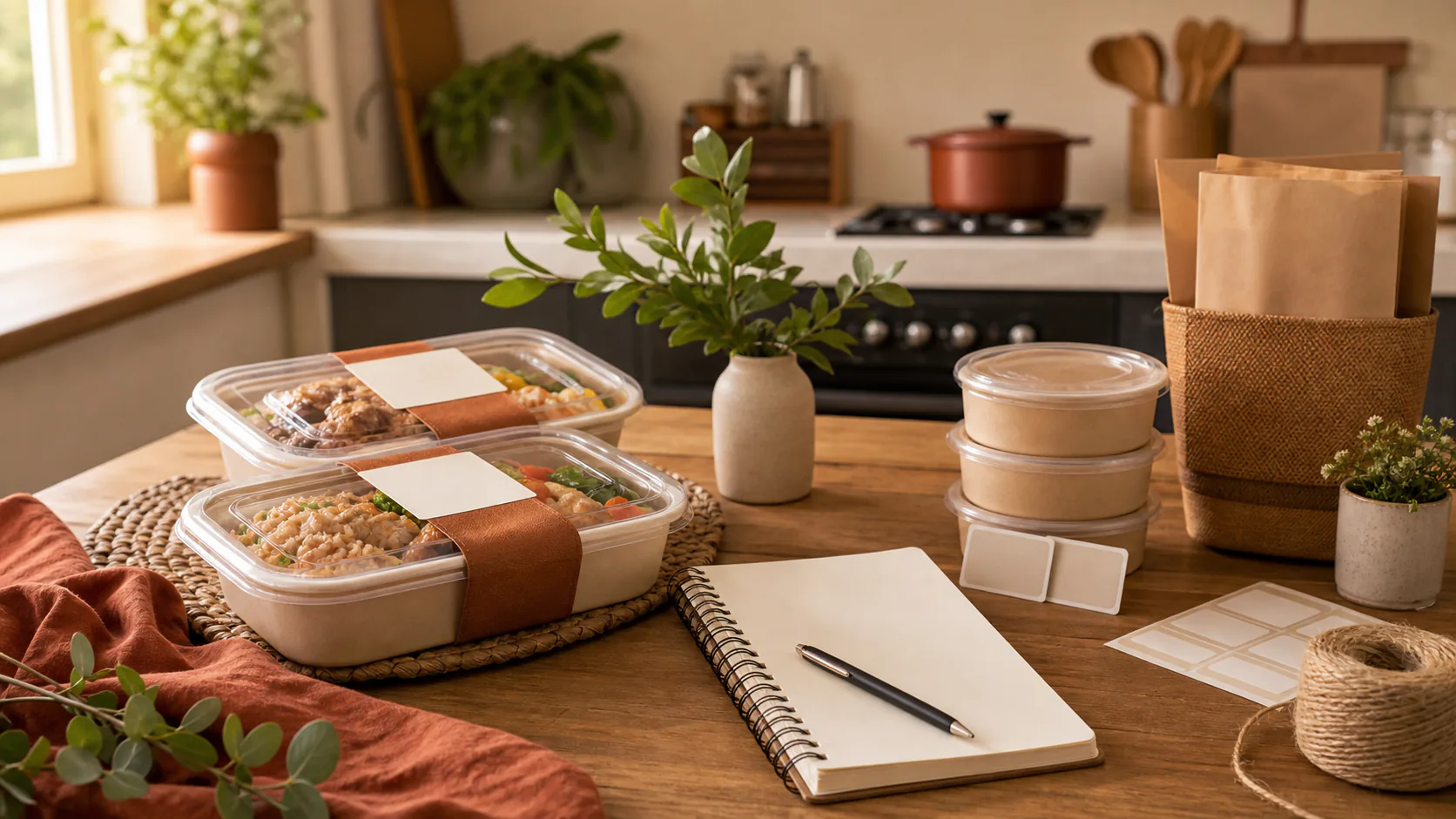
To sell plates of food from home, work in this order: confirm the exact meal is allowed from your kitchen, check for a real customer occasion, define one complete plate, test its yield and packaging, price the full order, set a capacity limit, collect paid preorders in one record, and run a deliberately small first sale. Promotion comes after those decisions—not before them.
This guide turns that sequence into a practical launch plan. The goal is not a restaurant-sized menu or an impressive follower count. It is one permitted, profitable sale that customers can understand and your kitchen can repeat. If the format itself is new to you, first read how the plate-sale model works.
Use this eight-step plate-sale launch map
Each step should leave behind something you can check. If the proof is missing, stop there instead of carrying uncertainty into a paid sale.
| Step | Decision to make | Proof before moving on |
|---|---|---|
| 1. Permission | May this exact food be prepared at this address and sold through this route? | Current agency guidance, permit status, or a written answer tied to the menu and location |
| 2. Demand | Which customer and occasion make this plate useful? | A short demand note covering buyer, occasion, service area, alternatives, and likely price range |
| 3. Offer | What exactly does one customer receive? | One menu description listing the main, sides, sauce, choices, portion, price, and handoff |
| 4. Test | Can the kitchen repeat the portion and packed quality? | A measured batch yield and a closed-container hold or travel test |
| 5. Price | Does the selling price cover the complete cost and intended profit? | A written cost per plate with labor, packaging, fees, and overhead included |
| 6. Capacity | How many accurate orders can the whole system handle? | A cap based on the tightest equipment, storage, packing, or handoff limit |
| 7. Orders | What makes an order confirmed? | One intake route, one payment rule, and one complete order record |
| 8. Fulfillment | When will every task and handoff happen? | A backward production schedule and a closeout sheet |
This order prevents a common mistake: attracting buyers before you know whether the menu, price, kitchen, and pickup plan work together.
Confirm that the meal and kitchen are allowed
Do not assume that calling the business “cottage food” makes a cooked dinner legal to sell. The answer can depend on the food, process, facility, address, sales channel, and local adoption of a state program.
The FDA’s current food-business overview says retail food businesses are generally regulated by state and local government and tells home-based sellers to learn the rules that apply to their circumstances. A private residence may be exempt from FDA food-facility registration, but that exemption is not permission to sell any meal from home.
Describe the proposal precisely when you contact the responsible state, county, or city authority: every main and side, the kitchen address, expected order count, payment method, and whether customers will pick up or receive delivery. Ask which permit or program applies, whether the food is allowed, what inspection or training is required, and whether the handoff method fits.
Check zoning and general business requirements separately. The Small Business Administration’s launch guidance notes that licenses and permits depend on activity and location and that local zoning can still apply to a home-based business. Save the agency, link, contact, answer, and date checked. The detailed hot-meal permission workflow can help you prepare that question.
Check demand before buying a full sale’s inventory
Permission does not prove that local customers want this meal at a workable price. Write a five-line demand note: the buyer, occasion, service area, available alternatives, and price range customers currently see. The SBA’s market-research guidance recommends checking demand, customer location, market saturation, and alternative prices.
Ask likely buyers specific questions: Which pickup day solves a real need? What would they buy instead? Which included side matters? Do not count compliments, likes, or a poll vote as an order. Narrow the offer before buying inventory; do not collect money before the permission and production plan are ready.
Turn one dish into one sellable plate
A dish is not yet an offer. Customers need to know what arrives, what choices exist, what it costs, and how they receive it. Start with one customer occasion—such as Friday dinner after work—and one menu your approved kitchen can repeat.
Write the plate in a single factual sentence. For example:
Friday chicken plate: two roasted chicken pieces, 8 ounces of seasoned rice, 4 ounces of green beans, and one sealed sauce cup; $16; prepaid pickup Friday from 5:30 to 6:30 p.m.
That is an example, not a recommended portion or price. Your version should come from your recipe test, costs, local rules, and customer. Include every paid add-on, size, sauce, garnish, drink, utensil, and container in the offer. Each choice creates another purchasing, labeling, packing, and accuracy task, so remove options that do not earn their complexity.
If you are still choosing the meal, use the plate-sale menu framework to compare demand, shared ingredients, quality after packing, equipment load, and cost before committing.
Test yield, packaging, cost, and capacity together
Run the actual recipe with the actual equipment. Measure the finished yield, portion every component with the tool you plan to use, close the real container, and hold or transport it for the promised handoff time. Record spills, trapped steam, soggy items, portion variation, and how long the batch and packing work take.
Then calculate the cost of one saleable plate. Include ingredients actually used, packaging, labels, bags, condiments, payment fees, labor, and a reasonable share of fixed or occasional costs. The full food-plate pricing method shows how to connect tested yield, variable cost, overhead, profit, and break-even volume.
Set the order cap from the tightest real constraint. A recipe that yields 30 portions does not create capacity for 30 orders if the refrigerator safely holds 18, the oven schedule supports 20, the packing table supports 16 without confusion, or the pickup window can handle only 12 clean handoffs. Your first cap is the lowest number the complete system can support with margin for correction.
Publish the complete offer and confirmation rule
Before taking orders, place the information customers need in one menu post or order page. The Federal Trade Commission’s small-business advertising guidance says advertising must be truthful and non-deceptive, and objective claims need support before the ad runs. Describe the food you will actually pack; do not turn preferences into unsupported health, quality, or performance claims.
- exact meal and included components;
- price, quantity limit, and order cutoff;
- what makes an order confirmed;
- accepted payment method;
- pickup location or delivery area and available windows;
- cancellation, refund, substitution, late-pickup, and sold-out rules; and
- a route for allergy questions before purchase.
Use one call to action, such as “Order and pay through this link.” Do not make customers combine a comment, direct message, payment-app note, and separate pickup conversation to create one order.
Your tool should enforce the plan rather than merely display it. Current Square pickup documentation, for example, shows customer-visible pickup times, order cutoffs, per-window limits, large-order limits, and pickup instructions. You do not need that particular platform, but you do need the same controls somewhere in the customer path. Test the complete online order route on a phone before sharing it.
Turn paid orders into one production plan
Move every confirmed order into one source of truth. Track the order number, customer name and contact method, exact items, quantity, total, payment status, handoff method and window, approved notes, and fulfillment status. Never treat likes, comments, or “save me two” messages as production quantities.
At the cutoff, reconcile the order list against payments. Resolve duplicates and incomplete orders, close the public quantity, and send each customer a confirmation with the item, total, promised window, pickup or delivery instructions, and contact route.
Now work backward from the first handoff. Schedule packing, cooking, preparation, thawing, shopping, and any approved advance work. Map shared constraints: oven time, burners, refrigerator space, cooling or holding equipment, counter space, labels, carriers, and the person completing each task. The plate-sale production schedule provides a fuller dependency map.
Work through a small first-sale example
Suppose a test batch yields 12 consistent chicken plates, the packed food passes its planned 30-minute hold test, and 12 orders fit the refrigerator, oven, packing area, and two pickup windows. The seller therefore opens 12 prepaid orders, not 20 hopeful ones.
The menu opens Monday and closes Wednesday at 7 p.m. or when 12 paid orders are reached. Six customers can select 5:30–6:00 p.m. and six can select 6:00–6:30 p.m. On Wednesday night, the seller reconciles the 12 records and sends confirmations. Thursday is for approved advance tasks and staging. Friday’s schedule works backward from 5:30 p.m., with labels and containers ready before hot production begins.
The important number is not 12. It is the logic: tested batch yield + verified storage + workable equipment sequence + controlled handoff = published cap. Your result may be smaller or larger.
Close the sale before repeating it
After the last handoff, record actual revenue, refunds, payment fees, ingredients used, packaging, labor time, waste, missing items, customer waits, and food left over. The IRS’s starting-a-business and recordkeeping guide explains that a business record system should summarize transactions and retain supporting documents; use the current federal, state, and local guidance that applies to your own tax situation.
Compare the plan with what happened. Did the batch yield match? Which task set the real capacity? Did customers understand the offer? Did the price cover the complete cost? Choose one improvement before opening the next menu.
Selling plates of food from home starts with proof, not promotion: permission for the exact offer, a defined customer occasion, one tested plate, a complete price, a firm cap, a paid order record, and a production plan. Build those eight pieces around a small first sale, then let real results—not guesses—shape the second one.
Ready to move?
Turn the research phase into your first sale.
The guide brings pricing, menu planning, marketing, and setup into one clear playbook.
Get the guide on Gumroad