How to Track Ingredients for Food Recall Readiness
Build a simple ingredient-to-batch trace that helps you identify affected food, orders, and customers quickly when a supplier announces a recall.
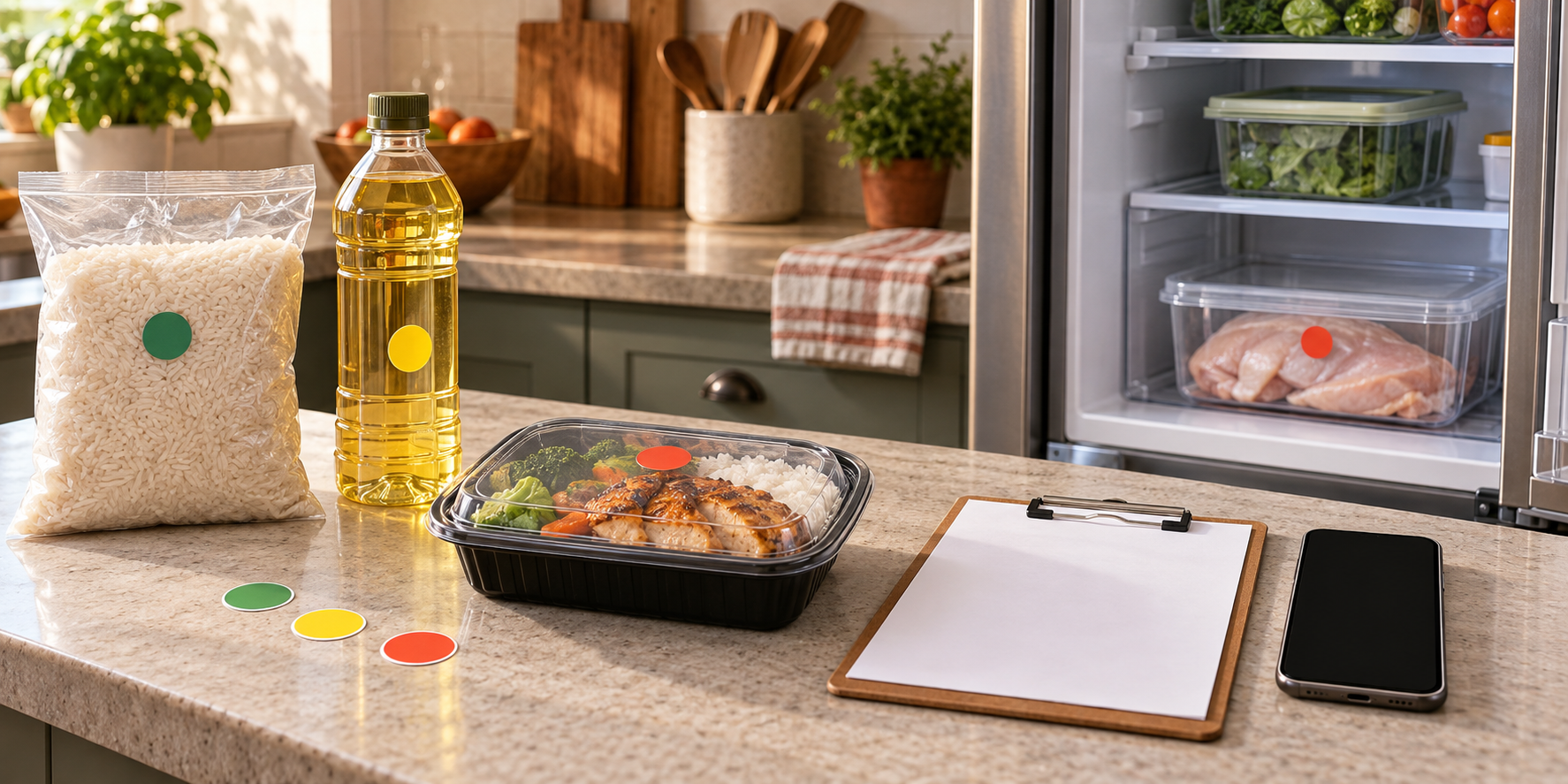
A recall notice can name a five-digit lot code, a use-by date, and a package size you bought three weeks ago. The original bag may be gone, part of the ingredient may be in storage, and the rest may already be inside several batches sold to different customers. A receipt alone tells you that you bought the product; it does not show where the product went.
This guide will help you build a short trace from supplier package to kitchen batch to fulfilled order. You will preserve the identifiers a recall notice uses, assign an internal batch ID, connect each ingredient lot to production, and test whether you can find the affected food and customers without relying on memory.
Recall, traceability, and record requirements depend on the food, activity, business, and jurisdiction. The FDA Food Traceability Rule has specific coverage and exemptions, and FDA currently says Congress directed the agency not to enforce it before July 20, 2028. That federal timing does not replace state or local requirements. Confirm your current obligations with the regulator responsible for your operation; use this article as an operating workflow, not a legal determination.
Save the supplier identity before the package disappears
Recall notices are specific. The product name alone may not be enough. FDA says a notice can include the package size and type, UPC, lot or other product codes, sell-by or use-by dates, label images, and distribution information. USDA FSIS notices may also use the establishment number printed inside the inspection mark or elsewhere on a meat, poultry, or egg-product package.
At receiving, capture the identifiers that actually appear:
- Supplier or store and purchase date
- Brand and exact product name
- Package size and count
- Lot, batch, or production code
- Best-by, use-by, freeze-by, pack, or production date
- UPC when present
- USDA establishment number when present
- Receipt, invoice, or order reference
- A clear image of the full label and the code location
Attach that information to the food-delivery receiving record. Do it before discarding a case, cutting away the coded part of a package, or moving dry ingredients into another container. If one delivery contains two lots of the same product, record two lines instead of blending them into one purchase.
Do not invent a missing code. Mark it “not found,” keep the package, and ask the supplier where the identifying information is located. A blank field is visible; a guessed number can point the response at the wrong food.
Keep the supplier lot and kitchen batch separate
The supplier lot identifies the food you received. Your internal kitchen batch identifies what you produced. Preserve both.
For example, an internal ID such as SEP11-CHX-01 could mean the first chicken-plate batch produced on September 11. That is only an internal example. It is not automatically the formal “traceability lot code” defined by the federal rule, and it should not replace the code printed by the supplier.
FDA describes a traceability lot code as an alphanumeric descriptor tied to the assigning firm’s records. It also explains that related data can be linked on an invoice or in the same spreadsheet row. Apply that linkage principle simply: one production row should connect your batch to every supplier lot that entered it.
| Kitchen batch ID | Menu item | Ingredient | Supplier identifier | Quantity used | Produced | Outcome |
|---|---|---|---|---|---|---|
| SEP11-CHX-01 | Chicken plate | Boneless chicken | Supplier lot as printed | 12 lb | 18 meals | 17 sold, 1 held |
The values are examples, not a required format. If the batch uses rice from two supplier lots, list both. If one supplier lot feeds three batches, repeat it on all three rows. The goal is a two-way trace: from an ingredient lot forward into every batch, and from a finished batch backward into every ingredient lot.
Connect each batch to fulfilled orders
A batch record says what you made. The order roster says who received it. Connect them with the same batch ID.
Add a batch field to the final roster in your weekly preorder system. Record the order ID, batch ID, quantity, fulfillment date and time, pickup or delivery outcome, and current customer contact method. If an order contains food from two batches, record both rather than choosing the easier one.
Use order IDs on kitchen labels so customer information is not exposed across the prep area. Keep the contact details in the protected order system with access limited to the people who need them. Your trace needs to reach the customer; it does not need to spread their phone number across multiple worksheets.
Close the quantities after service:
quantity produced = quantity sold + quantity held + quantity discarded or otherwise documented
That reconciliation reveals gaps. If the batch record says 20 meals but the roster and remaining inventory account for only 18, do not declare the trace complete. Find whether two meals were remade, sampled, wasted, combined with another order, or omitted from the handoff record.
Monitor notices and compare every identifier
Do not wait for a social-media post to reach you. Keep supplier contact details current and choose one responsible person to review official recall information before shopping and before a sale day. FDA provides food-recall information and subscription options, while USDA FSIS publishes recalls and product-identification guidance for products under its jurisdiction.
When a notice appears, compare all available details:
- Regulating agency and recalling company
- Exact product and brand
- Package size or form
- Lot, batch, production, or UPC code
- Relevant date range
- USDA establishment number when applicable
- States, stores, suppliers, or channels in the distribution description
A matching brand with a different lot is not the same result as a matching lot. Likewise, a matching date on a different package size may not be included. Read the full notice and any updates. If an identifier is unclear, hold the questionable food while you ask the supplier, recalling company, or appropriate authority rather than guessing that it is safe or affected.
Stop the flow when a product matches
If your identifiers match—or the scope is unresolved—stop using and selling the ingredient. Prevent related inventory and finished batches from being packed, served, donated, returned to ordinary stock, or discarded without direction.
Start one incident record with the notice, time discovered, person responsible, matched identifiers, quantities on hand, affected kitchen batches, and possibly affected orders. Mark held food clearly and physically separate it in a secure location that maintains any required temperature control. Preserve the original package, labels, receipts, production records, and customer roster.
Contact the supplier and the regulator or health authority that controls your operation. Follow the recall notice’s product-specific instructions. FDA’s current recall-effectiveness guidance emphasizes prompt removal from distribution, collaboration with the recalling firm, clear product identification, and specific return or disposal directions. Do not create your own cleaning, disposal, refund, medical, or public-warning instructions when the authority or notice needs to control them.
If affected food may already have reached customers, use the batch-to-order list to identify the recipients. Coordinate the message and action with the appropriate authority. A food-safety notification should clearly identify the affected order, explain the action the customer should take, and provide a way to confirm receipt; it should not speculate about who caused the problem.
If someone reports illness or injury, move into the documented food-safety complaint response as well. The recall trace identifies exposure; it does not diagnose a person or replace medical and public-health guidance.
Run a mock trace before a real recall
Choose one supplier lot from a recent completed sale and pretend a notice has named it. Do not contact customers during the exercise. Use only the records you would have in a real event.
Trace backward to the supplier, purchase, receipt, package image, and exact identifier. Then trace forward to every kitchen batch, remaining ingredient, finished meal, fulfilled order, hold, and documented waste. Reconcile the starting quantity as far as your measurement method reasonably allows.
Penn State Extension explains that a mock recall tests the links among raw materials, processing, finished lots, containers, and distribution. Record the test rather than simply saying it worked:
| Test point | Result | Repair needed |
|---|---|---|
| Supplier and code found | Complete / incomplete | Capture code location at receiving |
| All production batches found | Complete / incomplete | Add batch ID to recipe record |
| Inventory and usage reconciled | Complete / incomplete | Record waste and transfers |
| All fulfilled orders found | Complete / incomplete | Require batch field before handoff |
| Contact route available | Complete / incomplete | Update customer record |
There is no universal time target in this example. Record how long your test took, where it stalled, and which missing field caused the delay. Fix one gap, then repeat the same trace until the chain closes without memory, loose messages, or unlabeled containers.
Run an eight-point recall-readiness check
Before the next menu drop, confirm:
- Scope: You know which current federal, state, and local rules apply to your food and operation.
- Receiving: Supplier, product, package, lot, date, and purchase evidence are captured before repacking.
- Storage: Decanted or divided food stays connected to its original identifier.
- Production: Every kitchen batch links to every ingredient lot it used.
- Orders: Every fulfilled order links to the batch or batches it received.
- Monitoring: One person checks supplier, FDA, and USDA recall information on a defined schedule.
- Response: A match triggers a stop, hold, authority contact, controlled communication, and documented disposition.
- Testing: A mock trace reconciles inventory, production, distribution, and contact paths.
Start with one high-use ingredient from the next menu. Photograph its full package and code, add the supplier lot to the production record, and carry the kitchen batch ID into the final order roster. The Selling Plates guide can help connect that trace to the wider menu, ordering, pricing, and sale-day system. A short record made at receiving is far easier to use than a receipt pile and a memory test after a recall arrives.
Ready to move?
Turn the research phase into your first sale.
The guide brings pricing, menu planning, marketing, and setup into one clear playbook.
Get the guide on Gumroad