How to Prevent Cross-Contamination During Plate-Sale Prep
Prevent cross-contamination during plate-sale prep with a raw-food work block, separate tools, handwashing triggers, and a verified station reset.
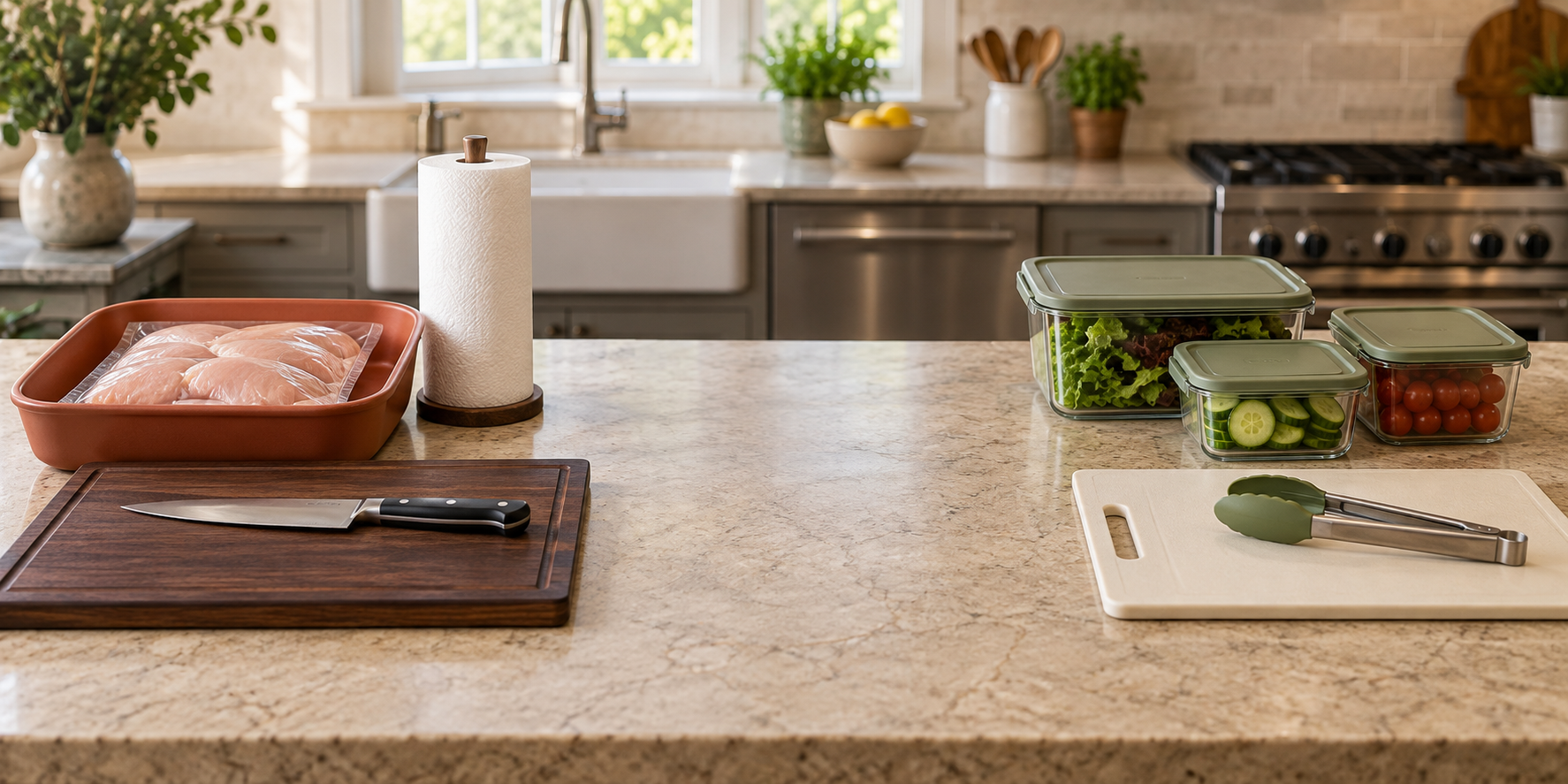
A raw-chicken package can cross the kitchen in seconds. It touches the counter, a hand opens a knife drawer, the same hand moves a seasoning jar, and a clean-looking board later holds slaw. The ready-to-eat side now depends on contacts nobody planned.
This guide will help you contain raw-poultry prep inside one scheduled work block. You will define the route, release a raw-food-only station, keep packages and tools inside that boundary, control hands and touchpoints, and verify the changeover before cooked food or ready-to-eat sides enter the space.
Food-business rules depend on the product, process, facility, and jurisdiction. FDA tells home-based operators to identify the federal, state, and local requirements that apply. Confirm that your kitchen, menu, raw-food process, equipment, cleaning method, and records are approved before using this workflow.
Build the menu flow before opening raw food
Start with the complete menu, not the cutting board. Mark every component that will be cooked after prep and every item that will receive no further kill step: produce, slaw, bread, garnishes, sauces, cooked food, containers, lids, and packing tools.
The 2026 FDA Food Code is a current model that jurisdictions may adopt or modify. Its separation provisions protect ready-to-eat food from raw animal food during storage, preparation, holding, and display. They allow controls such as separate equipment, separate areas, or preparing foods at different times. Your local rule controls, but the model gives the workflow a useful shape.
For a small kitchen, time separation is often the most realistic plan:
- Finish and protect ready-to-eat produce or cold sides under their own approved process.
- Remove those foods and their clean tools from the raw route.
- Stage and complete the raw-poultry block without switching to another task.
- Move the raw food directly into its scheduled cooking step.
- Complete the required wash-rinse-sanitize-dry changeover.
- Wash hands, release clean tools, and only then begin cooked-food handling or packing.
Put those blocks into the production schedule. If raw trimming, slaw assembly, and phone-based order changes all occupy the same ten minutes, the schedule is creating contamination opportunities.
Release a raw-food-only station
Choose the smallest practical area that can hold the task without raw packages crossing a clean station. Include the board, knife, containment tray, ingredient bowls that will go through cooking, waste route, and a landing place for soiled tools.
Before the package opens, verify:
- The counter and approved equipment have completed the required cleaning and sanitizing process.
- The raw-food board is smooth, clean, and in serviceable condition.
- Ready-to-eat food, clean packaging, serving utensils, and finished orders are outside the boundary.
- The handwashing sink is stocked and accessible.
- The cooking pan or next-step container is ready, so raw food does not wait.
- The waste container can be reached without touching its lid and then returning to food.
CDC recommends a separate board or plate for raw animal foods and another for produce, bread, and foods that will not be cooked. A different board color can make the boundary easier to see, but color is only a cue. The board still needs the correct use, cleaning, sanitizing, drying, storage, and replacement plan.
USDA advises replacing a cutting board when it becomes excessively worn or develops hard-to-clean grooves. Do not keep a damaged board as the “raw one” and assume that makes it safe.
Open, portion, and move raw food in one block
Bring out only the quantity tied to the current batch. Open it inside a leakproof tray, keeping packaging, absorbent pads, and raw juices within the boundary. If the package is leaking, damaged, at the wrong condition, or lacks a trustworthy history, use the documented accept, hold, or discard decision. Prep cannot repair a rejected ingredient.
Do not wash raw chicken. USDA explains that rinsing poultry can spread bacteria to food, utensils, the sink, and surrounding surfaces. Water does not destroy the bacteria; the validated cooking step does. Keep the sink out of the raw-poultry route unless your approved process specifically requires a sink task for another reason.
Move in one direction: sealed package to contained opening area, then to the dedicated board, then into the cooking pan or other controlled next step. Do not send trimmed chicken back into the grocery tray. Do not carry the knife to a seasoning shelf. Do not rest a contaminated hand on the refrigerator handle while deciding what comes next.
Pre-measure seasonings into clean single-batch containers before raw work begins. Those containers stay in the block and follow the approved cleaning or discard route afterward. The master spice jar stays outside.
Control hands, handles, and shared tools
Raw-food separation also fails through touchpoints. Faucet controls, refrigerator pulls, handles, phones, thermometer cases, aprons, and towels can carry the task beyond the station.
Assign each item a rule before work begins:
- Open needed drawers and stage clean tools before handling raw food.
- Keep the phone, order list, and payment device outside the active zone.
- Use the approved hands-free or barrier method for the waste container if your procedure includes one.
- Place soiled utensils in a defined container rather than in a handwashing or produce sink.
- Treat a glove as one-task equipment, not permission to touch raw chicken and then a handle.
- Wash hands at every trigger in the adopted procedure, including the switch from raw food to ready-to-eat work.
The FDA model names the raw-to-ready-to-eat switch as a handwashing trigger. Build it into the plate-sale handwashing routine. If a phone rings mid-task, let it wait or have a clean person answer it.
Run the full changeover before ready-to-eat work
When raw food leaves for cooking, an empty-looking board is not ready for slaw. Packaging, residue, handles, tools, and the counter must follow the documented reset.
Use the complete method required for each surface: remove debris, wash, rinse, sanitize with the approved product and conditions, and let the item dry as directed. The FDA model requires food-contact equipment and utensils to be cleaned when changing from raw food to ready-to-eat food and when contamination may have occurred. University of Minnesota Extension likewise says not to prepare ready-to-eat food on a board used for meat without cleaning and sanitizing it first.
Connect this changeover to the detailed cleaning and sanitizing schedule. A quick wipe, a clean apron, or a new glove does not release the station. Record the trigger, area and tools, completed method, verification, corrective action, and initials when your operation requires a record.
Do not release the station if a utensil is soiled, the sanitizer check fails, a board cannot be cleaned, or clean items lack protected drying space. Correct the condition and repeat the affected steps.
Keep cooked food out of the raw route
Cooking is a separate control; it does not clean the route used to reach the cooker. Once the batch passes its documented cooking-temperature release check, move it with clean tools to a clean pan or protected holding container. Never return cooked chicken to the raw tray, board, tongs, marinade bowl, or prep counter.
Fresh tongs, the cooked-food pan, portion tools, ready-to-eat sides, and packaging should enter only after the raw station closes and the changeover passes. If helpers divide raw and cooked work, define their zones so routes do not cross.
Work through one 24-order example
Imagine 24 orders of roasted chicken, rice, and ready-to-eat slaw. The slaw is prepared first under the documented produce workflow, covered, identified, and moved to its protected cold zone. Its board, colander, containers, and utensils leave the raw route.
The raw block stages two contained chicken packages, one dedicated board and knife, two cooking pans, seasoning cups, and a soiled-tool container. One person portions and pans the chicken without touching the phone, refrigerator, clean packaging, or master seasonings. The pans move directly to cooking.
Package waste is removed under the approved procedure and the worker washes hands. The station, knife, board, handles, and other affected surfaces complete the documented changeover and dry as required. Only after verification do clean tools and covered slaw return.
That is an example, not a universal layout or order of operations. A menu with raw seafood, eggs, multiple animal species, or limited sink capacity may need different equipment, area separation, timing, or a smaller order cap. Confirm the exact process with the authority responsible for your operation.
Run an eight-point cross-contamination check
Before the next sale, confirm:
- Permission: The food, facility, equipment, and process meet current local requirements.
- Flow: Ready-to-eat work, raw prep, cooking, changeover, and packing have separate scheduled blocks.
- Boundary: Raw packages, juices, tools, waste, and ingredient cups stay inside one defined route.
- Tools: Boards and utensils are intact, task-specific, and protected before use.
- Hands: Every raw-food contact and task switch leads to the required handwash and glove change.
- Touchpoints: Phones, handles, jars, cloths, and clean packaging cannot bridge the raw and clean zones.
- Reset: The complete approved cleaning and sanitizing method passes before ready-to-eat work begins.
- Cooked side: Clean tools and containers receive the released food; nothing returns to raw equipment.
Rehearse the route once with empty packages and clean tools. Mark every moment a hand wants to leave the station, then stage or reassign that task before real food enters the kitchen. The Selling Plates guide can help connect that safe production block to menu size, order caps, pricing, and the wider sale-day plan.
Ready to move?
Turn the research phase into your first sale.
The guide brings pricing, menu planning, marketing, and setup into one clear playbook.
Get the guide on Gumroad