How to Handle a Power Outage Before Plate Sales
Build a power-outage plan for plate sales with cold-storage preparation, time-and-temperature records, discard decisions, and a safe restart check.
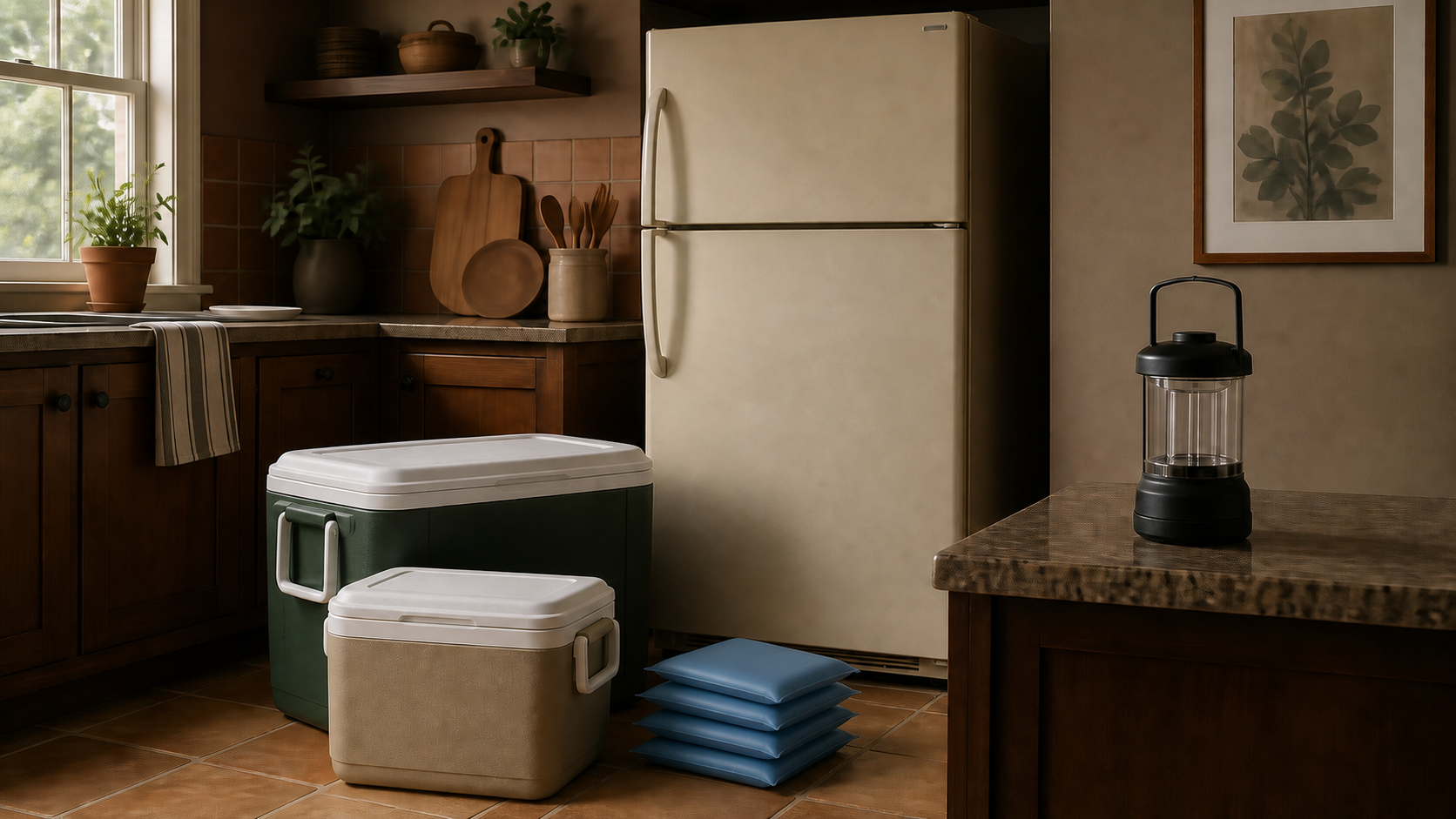
A power outage one hour before pickup does not leave time to invent a food-safety plan. The refrigerator is warming, a batch may be halfway through cooking, customers are expecting food, and every opened door removes more cold air.
This guide will help you prepare an outage kit, record the interruption, protect cold food, make a batch-by-batch keep-or-discard decision, and decide whether the sale must stop. The goal is not to save every ingredient. It is to preserve reliable evidence and cancel before uncertainty becomes a customer’s meal.
Power-outage rules depend on your food, facility, permit, equipment, and jurisdiction. The FDA Food Code is a model for retail-food regulation, not one universal rule for home sellers. Confirm the plan, notification requirements, temperature limits, records, and restart approval your state or local authority requires before the next service.
Decide who can stop the sale
Write the stop decision before the weather alert or failed breaker. Name the person who will record the outage, call the utility, contact the regulator, assess each batch, and notify customers. In a one-person business, put those jobs in order on one card so the loudest message does not become the first priority.
The FDA model says a food establishment generally stops operations and notifies its regulatory authority when an extended electrical interruption may create an imminent health hazard. The model recognizes continued operation during an extended outage only when the regulator has approved a written emergency operating plan, immediate controls are taken, and the authority is informed when the plan is implemented.
That makes “the oven still feels warm” or “pickup starts soon” a poor reason to continue. Write objective stop triggers tied to your approved plan, such as loss of required refrigeration, cooking, ventilation, lighting, hot water, handwashing, or temperature-monitoring capacity. If food safety cannot be assured, stop production and close the sale.
Keep these contacts on the card:
- State or local food regulator and after-hours number
- Electric utility outage line and outage-map address
- Equipment service provider
- Seller or team lead authorized to discard food
- Customer message channel and refund process
Prepare evidence before the power fails
An outage is easier to assess when you know what the equipment was doing immediately beforehand. Keep appliance thermometers in the refrigerator and freezer, and use a checked food thermometer for product decisions under your approved procedure. The food-thermometer accuracy routine explains how to verify the probe before sale day.
Build a small outage kit with:
- Clean insulated coolers sized for the food you may need to protect
- Frozen gel packs or ice stored and ready, not promised by a future shop
- A battery lantern positioned away from food and wet work
- Blank outage logs, waterproof marker, tape, and batch labels
- A current refrigerator and freezer inventory map
- The regulator-approved emergency procedure and food-disposition guide
The FDA’s power-outage guidance recommends appliance thermometers, frozen water or gel packs, coolers, and a known source of block or dry ice. If dry ice appears in your plan, get handling, ventilation, and food-contact instructions from the supplier and safety authorities; do not improvise with it in a small closed kitchen.
Connect the kit to your normal refrigerator map and capacity test. A current shelf and batch list lets you decide which unit or cooler needs attention without repeatedly opening doors to search.
Control the first minutes of the outage
Write down the exact start time. Then keep refrigerator and freezer doors closed while you confirm the outage scope and estimated duration. Do not open a unit simply to see whether the light is off.
Minnesota Department of Health’s food-establishment power-outage guidance tells operators to stop when food safety cannot be assured, record the start and length of the outage, and monitor time/temperature control for safety food. It also warns against placing hot food into powerless refrigerators or freezers because the added heat can put more stored food at risk.
Use this first-response order:
- Record the outage start, equipment affected, and last known readings.
- Stop any process that no longer has the controls required by your procedure.
- Keep cold-storage doors closed until the approved monitoring or transfer point.
- Identify food in active cooking, cooling, thawing, cold holding, and hot holding.
- Call the regulator when your rule or stop condition requires it.
- Tell customers that service is paused; do not promise a new pickup time yet.
Food partway through cooking needs its own disposition. Do not assume that cooking can resume later from the same point. Isolate it and follow the corrective action accepted for your operation.
Use the familiar outage times as guardrails, not permission
Federal consumer guidance says a closed refrigerator keeps food cold for about four hours, while a closed full freezer holds temperature for about 48 hours and a half-full freezer for about 24 hours. The USDA emergency guide and CDC’s current outage advice give materially similar figures.
Those are planning guardrails, not a four-hour license to keep selling. Door openings, starting temperature, room conditions, food load, equipment performance, and your business rules all affect the decision. Your regulator-approved plan controls whether food may remain in place, move to a cooler with a cold source, be sold, or be discarded.
If the plan calls for a cooler transfer, prepare the cold source and destination before opening the refrigerator. Move only identified food, keep raw products contained away from ready-to-eat food, label the cooler, and record its temperature. An insulated box slows warming; it does not prove the food stayed within limits.
Do not put food outdoors because the air feels cold. Temperatures change, sunlight warms packages, and food can be exposed to dirt, water, or animals. Do not move sale inventory to an unapproved private refrigerator without your regulator’s permission.
Decide batch by batch after power returns
Power returning does not reset the time history. Before using a food, connect its identity to the outage start, last acceptable reading, highest known temperature, cold source, package condition, and any thawing or leakage.
Use one line per meaningful batch:
| Batch or item | Last controlled check | Outage evidence | Decision and authority |
|---|---|---|---|
| Cooked chicken, batch A | Refrigerator record before outage | Elapsed time, food temperature, unit history | Hold, use, or discard under approved plan |
| Frozen seafood, batch B | Freezer record before outage | Ice crystals, package temperature, seal and leak check | Refreeze, cook, or discard under approved plan |
The FoodSafety.gov outage chart separates foods that may be kept from foods that should be discarded under federal consumer guidance. Use the appropriate business rule and inspect each item rather than declaring the entire refrigerator safe because one container is cold.
Never taste food to decide whether it is safe. Unsafe food can look and smell normal. Do not mix an uncertain batch into a known batch, change its label, or rely on later cooking to repair a broken cold history. FDA notes that inadequately refrigerated perishable food can cause illness even after thorough cooking.
When the record is missing or the controlling limit was exceeded, discard the food under your procedure. Record the quantity and reason so the food-waste review can improve preparation without turning discarded food back into inventory.
Cancel before the kitchen forces a bad compromise
The sale needs more than food that happens to be cold. You may also need reliable cooking and holding equipment, safe water, handwashing, cleaning and sanitizing, ventilation, lighting, order records, and a controlled pickup area.
Use a go-or-no-go check:
- Can every ingredient and batch be released from a complete record?
- Have all required utilities and food-safety controls recovered?
- Can the remaining menu still follow its validated recipe and production schedule?
- Has affected equipment been checked, cleaned, and sanitized as required?
- Has the regulator authorized restart when authorization is required?
- Can customers receive an accurate menu, pickup time, and refund or cancellation message?
If any required answer is no, cancel or postpone. Do not quietly remove one failed side, substitute an unchecked ingredient, or compress the production schedule to recover lost time. A smaller approved menu may be possible only when every remaining process still meets your rules and customer commitments.
Close the outage record before restarting
Record when power returned, when each unit recovered, which food was kept or discarded, who made the decision, who was contacted, and what approval was received. If operations stopped under the FDA model’s imminent-health-hazard provision, the model calls for regulatory approval before resumption; follow the law adopted for your operation.
Then update the emergency plan. If the lantern was buried, the cooler was too small, the thermometer was unreadable through the door, or customer refunds took an hour, give that failure an owner and correction before the next sale.
Start today by placing an appliance thermometer in each cold unit, freezing the planned gel packs, and writing the five phone numbers and stop triggers on one card. The Selling Plates guide can help connect that outage decision to the wider menu, order, pricing, and sale-day system. A clear cancellation is recoverable; a meal sold without a trustworthy safety history is not.
Ready to move?
Turn the research phase into your first sale.
The guide brings pricing, menu planning, marketing, and setup into one clear playbook.
Get the guide on Gumroad