How to Build a Cleaning and Sanitizing Schedule for Plate Sales
Build a practical cleaning and sanitizing schedule for plate sales with clear task triggers, label-based sanitizer checks, records, and sale-day resets.
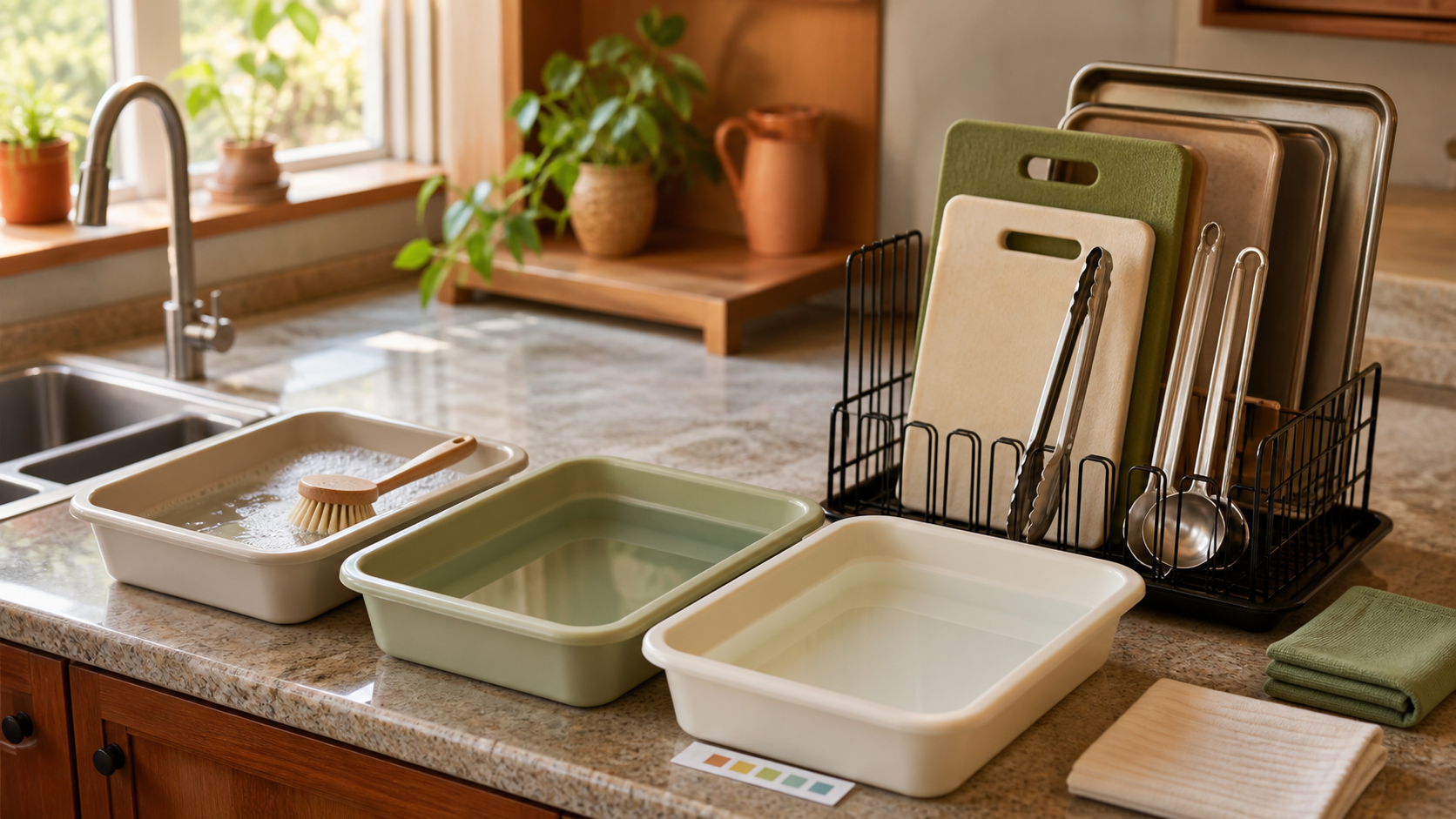
A clean-looking counter is not necessarily ready for food. Grease can block a sanitizer, the solution may be mixed incorrectly, or a washed pan may be stacked while wet and contaminated again before the next batch. On a busy plate-sale day, “clean as you go” is too vague to control those failures.
This guide will help you turn cleaning and sanitizing into a schedule with named surfaces, clear triggers, responsible people, verified sanitizer, and a completed record. The result is a reset you can place between raw preparation, ready-to-eat work, allergy-related orders, packing, and the end of service instead of hoping someone remembers it.
Cleaning requirements depend on your product, facility, equipment, and jurisdiction. The FDA Food Code is a model for retail-food rules, not a single law for every home seller. Confirm the process, sink setup, approved products, frequencies, and records required by your state or local regulator before using this schedule.
Separate cleaning, sanitizing, and disinfecting
These words describe different jobs. Cleaning uses water, detergent, and physical action to remove food, grease, dirt, and other material. Sanitizing treats a cleaned surface to reduce microorganisms to the level required for food-contact use. Disinfecting is a different process, often used for environmental or illness-response situations.
The CDC distinguishes cleaning, sanitizing, and disinfecting and says a surface should be cleaned before it is sanitized or disinfected because dirt can interfere with the chemical. A disinfectant is not automatically suitable for a cutting board, prep table, or utensil. Use only a product approved for the intended food-contact use, exactly as its label and your regulator require.
Write “clean and sanitize prep table,” not “wipe counter,” on the schedule. A quick wipe may move visible crumbs while leaving grease or allergen residue behind. It also does not prove that a sanitizer had the correct strength or stayed wet for the required contact time.
Make a surface and equipment map
Walk through one menu from receiving to handoff and list everything that touches food or can transfer contamination to a food-contact surface. Include the obvious items—knives, cutting boards, pans, tongs, ladles, scales, thermometers, and counters—and the easy-to-miss parts: mixer attachments, can-opener blades, blender gaskets, faucet handles, refrigerator pulls, cooler interiors, and reusable transport equipment.
Group the list by how each item is cleaned:
- Removable utensils and parts that go through manual or mechanical warewashing
- Fixed food-contact equipment that must be cleaned in place
- Non-food-contact touchpoints that need their own cloths and schedule
- Single-use items that are discarded rather than washed and reused
- Equipment that must be disassembled according to its manufacturer
Give every item a location, method, trigger, and owner. If a scale needs protection from immersion or a slicer has a hidden food-contact part, put that instruction beside the task. “Equipment” is too broad to complete or verify.
Connect the map to your production schedule for plate sales. Cleaning time occupies the sink, counter, tools, and a person just as cooking does. If the timeline has no room for the reset, it is not a workable timeline.
Use the full reset in the right order
University of Minnesota Extension describes a five-step sanitation routine for food-contact surfaces: remove debris, wash, rinse, sanitize, and dry as directed. Each step prepares the surface for the next.
Use that sequence consistently:
- Remove food and debris. Scrape or brush residue into the correct waste container. Do not wash chunks of food into a sanitizer basin.
- Wash. Use the approved detergent, water conditions, tool, and scrubbing action needed to loosen grease and soil.
- Rinse. Remove detergent and loosened material with clean water so they do not interfere with the sanitizer.
- Sanitize. Apply the approved method at its required concentration, temperature, and contact time.
- Air-dry or finish as directed. Keep the item protected from splash, hands, used towels, and dirty equipment.
Do not stack wet pans or wipe sanitized utensils dry with a service towel. The FDA model Food Code requires cleaned and sanitized equipment to drain and air-dry before it is stacked or stored; its public-health explanation notes that trapped moisture can support microbial growth and cloth drying can transfer contamination.
Verify the sanitizer instead of guessing
Choose the sanitizer with your regulator and the equipment or product instructions. Keep the original label and safety information. The current FDA model requires chemical sanitizers to meet food-contact criteria and be used according to their EPA-registered label directions. Those directions control the concentration range, water conditions, contact time, whether a rinse is required, and relevant safety precautions.
At opening and whenever a fresh solution is made:
- Confirm that the product is the approved one for the task.
- Mix it with the water temperature and dilution method on the current label.
- Use test strips made for that sanitizer and its expected range.
- Record the result rather than judging by smell, color, or bubbles.
- Replace the solution when the label, test result, soil load, or operating procedure requires it.
- Never mix cleaners or sanitizers, and store chemicals where they cannot contaminate food, packaging, or clean utensils.
University of Minnesota Extension’s current guidance explains that sanitizer types behave differently and that concentration should be checked with the matching test strip. Product strength can change, so do not copy an old bleach ratio or another kitchen’s quat number onto your schedule. The label and adopted local rule are the control.
Set triggers, not just clock times
Some cleaning tasks happen at opening or closing. Food-contact resets also need event-based triggers. In the FDA model, surfaces are cleaned when changing from raw to ready-to-eat food, after possible contamination, before a food thermometer is used or stored, and at other defined process changes. Equipment used continuously with time/temperature control for safety food is generally cleaned at least every four hours, with specific exceptions.
Treat that four-hour interval as a model-code reference, not permission to wait four hours after a spill or raw-food contact. Follow the rule adopted for your operation and clean sooner whenever contamination may have occurred.
Useful triggers include:
- Before the first food touches a prepared station
- After raw poultry, meat, seafood, or eggs and before ready-to-eat food
- Between incompatible allergen profiles under your accepted procedure
- After a spill, dropped tool, broken container, or unknown contact
- Before using a cleaned thermometer on cooked or ready-to-eat food
- At the required interval during continuous production
- Before packing begins and after the final order leaves
For an accepted allergy-related order, follow the more specific food-allergy order workflow. FDA research found that a complete wash-rinse-sanitize-air-dry process was effective at removing the studied allergens and reducing transfer, while the effectiveness of simple wiping varied by surface, soil, and wipe condition.
Build the sale-day schedule around process changes
Imagine a 24-order menu with cooked chicken, rice, and a ready-to-eat slaw. The schedule should not send a helper straight from trimming raw chicken to portioning slaw because both tasks fit into the same 30-minute block.
A safer example looks like this:
| Trigger | Task | Owner | Verification |
|---|---|---|---|
| Before prep | Check sink setup, detergent, sanitizer, matching test strips, clean tools, and drying space | Lead | Opening check complete |
| Raw chicken finished | Remove debris; wash, rinse, sanitize, and air-dry the raw-work station and tools | Prep cook | Reset completed before slaw enters |
| Slaw finished | Clean and sanitize the station; protect finished slaw in approved cold holding | Prep cook | Container and station checked |
| Before packing | Reset counter, scales, portion tools, and touchpoints used for packing | Packer | Packing station released |
| After handoff | Disassemble equipment, complete final cleaning, air-dry, remove waste, and store chemicals | Assigned closer | Closing record signed |
Those rows are a framework, not a universal cleaning schedule. Replace them with the foods, surfaces, methods, and required intervals in your operation. If one person owns every cooking and cleaning task at the same time, reduce the menu, separate the work, or add realistic time rather than skipping a reset.
Keep a short record that proves the reset happened
A useful record should help the next sale. Use one line for each meaningful task or trigger:
| Date and time | Area or item | Trigger | Method or product | Verification | Action | Initials |
|---|---|---|---|---|---|---|
| Aug. 8, 2:10 p.m. | Raw-prep counter and tools | Raw chicken complete | Approved five-step reset | Test result in range | Released for slaw prep | AB |
That entry is an example. Record the actual product or method, result, and corrective action your procedure requires. If the sanitizer test is out of range, a surface is still greasy, or a cleaned part falls on the floor, do not check the task complete. Correct the cause and repeat the affected steps.
Review the record after service. Repeated misses may mean the basin is too small, the drying rack is overloaded, the solution is made too early, or the production plan creates an impossible handoff. Fix the system before urging people to work faster.
Run a seven-point check before the next sale
Before production begins, confirm:
- Rules: The facility, sink setup, products, methods, and frequencies match current local requirements.
- Map: Every food-contact item and high-risk touchpoint has a named cleaning method.
- Sequence: Debris removal, washing, rinsing, sanitizing, and drying happen in order.
- Chemistry: The current label, correct test strips, contact time, and safety precautions are available.
- Triggers: Raw-to-ready-to-eat changes, contamination events, intervals, packing, and closing are on the schedule.
- Ownership: Each task has one responsible person and enough time, tools, and drying space.
- Records: A failed check leads to a correction, not a completed box.
Start with one menu and mark every point where food changes surfaces or process stage. Add each reset to the same plan that controls recipes, batches, packing, and pickup. The Selling Plates guide can help connect that sanitation plan to the wider menu, pricing, ordering, and sale-day system so the next service is repeatable from the first prep task to the final close.
Ready to move?
Turn the research phase into your first sale.
The guide brings pricing, menu planning, marketing, and setup into one clear playbook.
Get the guide on Gumroad