Selling Hot Food From Home: How to Check the Rules
Selling hot food from home may require a specific home-meal permit or an approved kitchen. Check the menu, address, and sales route first.
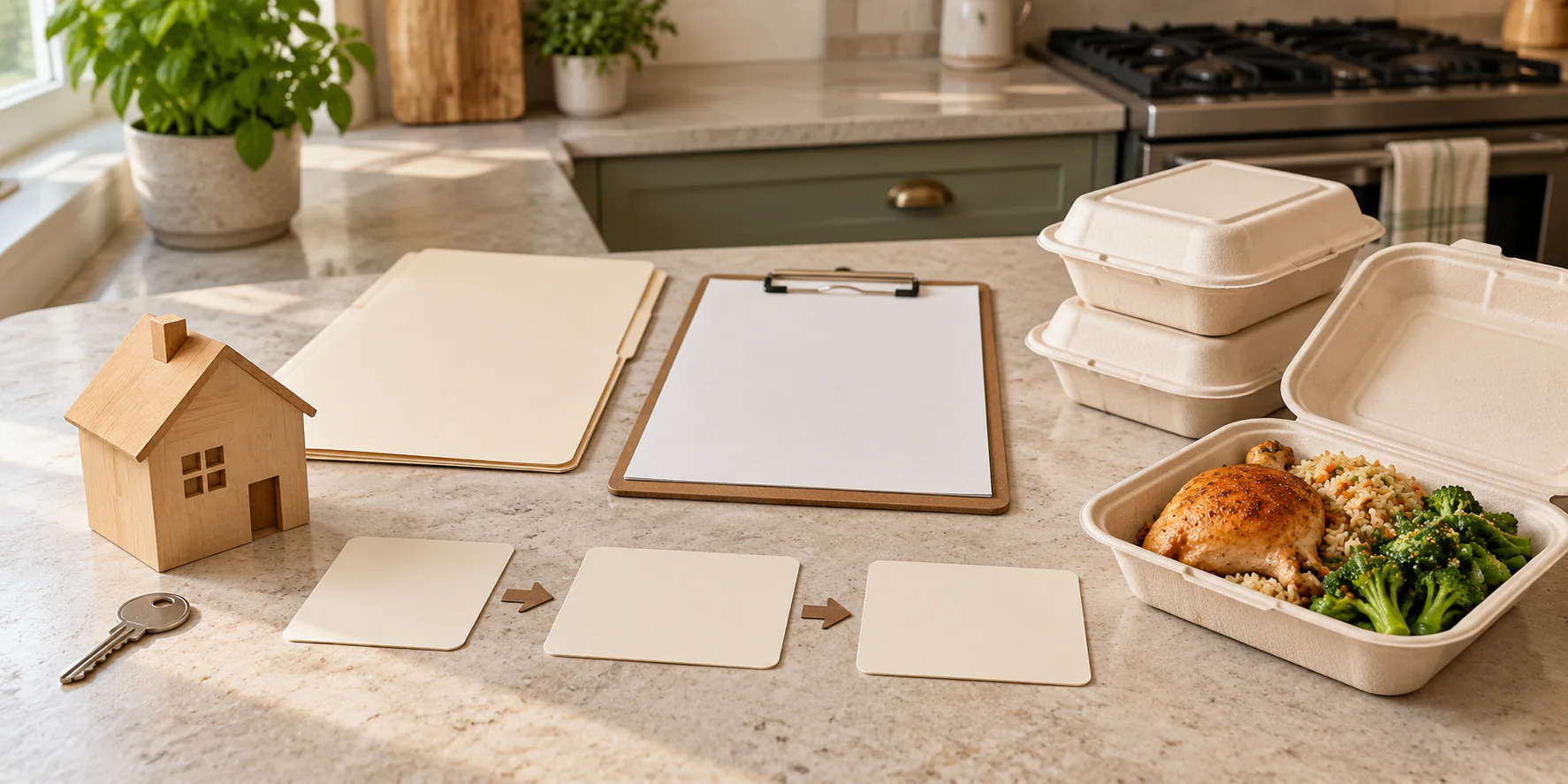
Selling hot food from home is allowed only when your exact menu, kitchen address, and sales route fit a current state and local authorization. Some places have a permit for meals prepared in a private home. Others limit residential food businesses to shelf-stable products, which means a hot dinner must be made in an approved shared or commercial kitchen.
The useful question is therefore not simply “Can I sell hot food from home?” It is: Which permission route covers this meal at this address, and what must I complete before taking an order? This guide gives you a practical way to get that answer. It is a research workflow, not legal advice or permission to operate.
Identify the permission route before planning the sale
There is no single US license called “selling hot food from home.” The FDA’s food-business overview explains that licenses and permits vary with the product and facility, while retail food businesses are generally regulated by state and local government.
Most proposals will lead to one of four outcomes. The names and details vary by jurisdiction, so treat this table as a route finder rather than a legal classification.
| Possible route | What it may mean for a hot-meal seller | Your next proof |
|---|---|---|
| Cottage-food or residential-kitchen program | The program may cover only named foods that do not require hot or cold holding, although some states allow a wider range | The current allowed-food list and the exact product category for every menu item |
| Home-meal or microenterprise-kitchen permit | A jurisdiction may allow prepared meals from a private home under a specific permit and operating limits | Local adoption, application, inspection, training, menu, sales, and handoff requirements |
| Retail-food permit using an approved facility | The meal may be sellable, but not when produced in the ordinary home kitchen | A confirmed facility, operator permit relationship, storage plan, and approved sales route |
| No current fit | The menu, address, process, or sales method is outside the available routes | A written alternative from the regulator before advertising, deposits, or food production |
One federal detail causes frequent confusion: FDA says a private residence is not required to register with the agency as a food facility. That registration exemption is not a food-service permit. State, county, city, zoning, and program-specific rules can still decide whether the meal may be prepared and sold there.
Put the complete offer on one page
Regulators cannot classify “hot food” without the facts that change the answer. Write a one-page offer card before searching for an application:
- Food: every main, side, sauce, garnish, drink, and special process.
- Kitchen: the full address and whether it is a primary home kitchen, separate residential kitchen, shared kitchen, or commercial facility.
- Sale: preorder or walk-up, direct-to-consumer or wholesale, payment method, expected volume, and selling days.
- Handoff: home pickup, delivery, market, event, retail store, or another route.
- Timing: when ingredients arrive, when food is prepared, whether anything is cooled or stored, and when customers receive it.
Change one element and the legal route may change. “Roasted chicken, rice, cooked vegetables, and sealed sauce for Friday preorder pickup” is specific enough to review. “Dinner plates” is not.
Do not buy equipment, publish the menu, or accept a deposit while the result is still unclear. A business registration, tax account, or social-media page proves that the business exists; it does not prove that the proposed food may be made at the proposed address.
Compare three official examples before trusting a shortcut
These examples do not summarize every state. They show why an answer from another seller—or even another county—may not apply to you.
| Official example | What the current guidance shows | Why the shortcut fails |
|---|---|---|
| California MEHKO | California describes a permitted microenterprise home kitchen that may prepare meals, but only where the local jurisdiction has authorized the program and the operator applies through the local environmental health agency | “California allows home meals” leaves out the local adoption and permit decision |
| Massachusetts residential kitchen | Massachusetts says its retail residential-kitchen route covers cottage foods that can be held safely at room temperature and excludes finished products requiring hot or cold holding for safety | A permit for home-baked goods does not authorize a cooked dinner |
| Texas cottage food | Current Texas guidance under SB 541 allows a broader range of foods but excludes categories including meat, poultry, and seafood; time-and-temperature-controlled foods bring registration and handling conditions | “Texas allows hot food” is too broad to classify a chicken plate or its sales route |
Read the responsible agency’s page, not an undated roundup. California’s home-kitchen permit requirements, Massachusetts’s residential-kitchen FAQ, and the Texas cottage-food guidance each connect the food to a different legal structure.
Follow the authority ladder for the kitchen address
Start with the agency that regulates retail food or home-produced food in your state. The FDA’s state retail-food directory links to state regulators and food codes. Then work down the ladder:
- State food authority: identify the possible category for the food and facility.
- County or city health authority: confirm who controls the exact address and whether a state-authorized local program has been adopted.
- Planning or zoning office: check customer pickup, deliveries, signs, traffic, employees, and home-business restrictions.
- Business and tax offices: confirm registrations, local licenses, and tax obligations separately from food approval.
Do not assume one approval covers all four layers. A food program may allow the product while zoning restricts customer pickup. A city business license may say nothing about whether meat can be prepared in a residential kitchen.
If two offices redirect you to each other, ask each one to name the program, code section, or authority that controls the decision. Save the page that identifies the responsible office and record the date you checked it.
Ask for a decision tied to the actual meal
Avoid the broad question “Can I sell food from home?” Send a short written description instead:
I plan to prepare roasted chicken, rice, cooked vegetables, and sealed sauce in my primary home kitchen at [address]. Customers would preorder and pay online for direct Friday pickup. I expect no more than [number] meals per sale. Which food-business category applies, may this complete meal be prepared at this address, and which approval is required before I advertise or accept payment?
Then ask:
- Does every main, side, sauce, and process fit the named route?
- Must the kitchen be inspected, modified, or replaced with an approved facility?
- Are food-handler or manager credentials required?
- Are pickup, delivery, online payment, and the planned volume allowed?
- Which labels, notices, records, or plan documents are required?
- Is separate local adoption, zoning clearance, or a business license still needed?
Ask for a link to the controlling program or application. A verbal “sounds fine” is less useful than a written answer tied to the menu, address, and handoff plan.
Save a permission record before taking orders
Create one record that another person could audit. Include the menu version, kitchen address, facility type, agencies contacted, named permit route, rule links, allowed sales methods, prohibited foods or processes, training and inspection requirements, contact role, date checked, and next renewal or review date.
Use three decision states:
- Green: the route is named and every prerequisite is complete.
- Yellow: an application, inspection, written determination, or local adoption check is pending.
- Red: the food, facility, or sales method does not fit the route.
Yellow is not permission to advertise or take deposits. Green should still identify the conditions you must keep meeting, not just contain a permit number.
Choose a compliant alternative when home production does not fit
A “no” for the ordinary home kitchen is not necessarily a “no” for the offer. Ask which approved shared or commercial kitchen could support the same menu, whether your business needs its own permit, and how storage, transport, pickup, and delivery must connect to that facility.
Do not assume renting kitchen time solves every requirement. Confirm the facility, operator, process, storage, sales channel, and permit relationship as one plan.
If changing the food is more practical, return to the food plate idea framework and make permission a pass-or-fail screen. Once the route is confirmed, use the home plate-sale startup guide to test yield, price, packaging, capacity, and a small first sale. Build the online order path only after the underlying offer and handoff method are allowed.
Run the final permission check
Before selling the first meal, confirm that a current official source or written agency response answers all eight questions:
- What is the complete meal, including every side and sauce?
- Which authority regulates that food at the kitchen address?
- Which named route applies, and which similar route does not?
- Has any required local home-meal program been adopted?
- Is the proposed kitchen approved, or is another facility required?
- Are pickup, delivery, online payment, and the planned volume allowed?
- Which approvals must be complete before the first advertisement or payment?
- Where is the answer saved, and when will you recheck it?
The answer you need is not simply yes or no. It is: yes, under this named route, for this menu, at this address, after these steps—or no, but this approved alternative is available. Get that sentence in writing before you sell the first plate.
Ready to move?
Turn the research phase into your first sale.
The guide brings pricing, menu planning, marketing, and setup into one clear playbook.
Get the guide on Gumroad