How to Receive Food Deliveries for Plate Sales
Build a safer food-delivery receiving routine with source checks, package inspection, temperatures, rejection decisions, and fast storage.
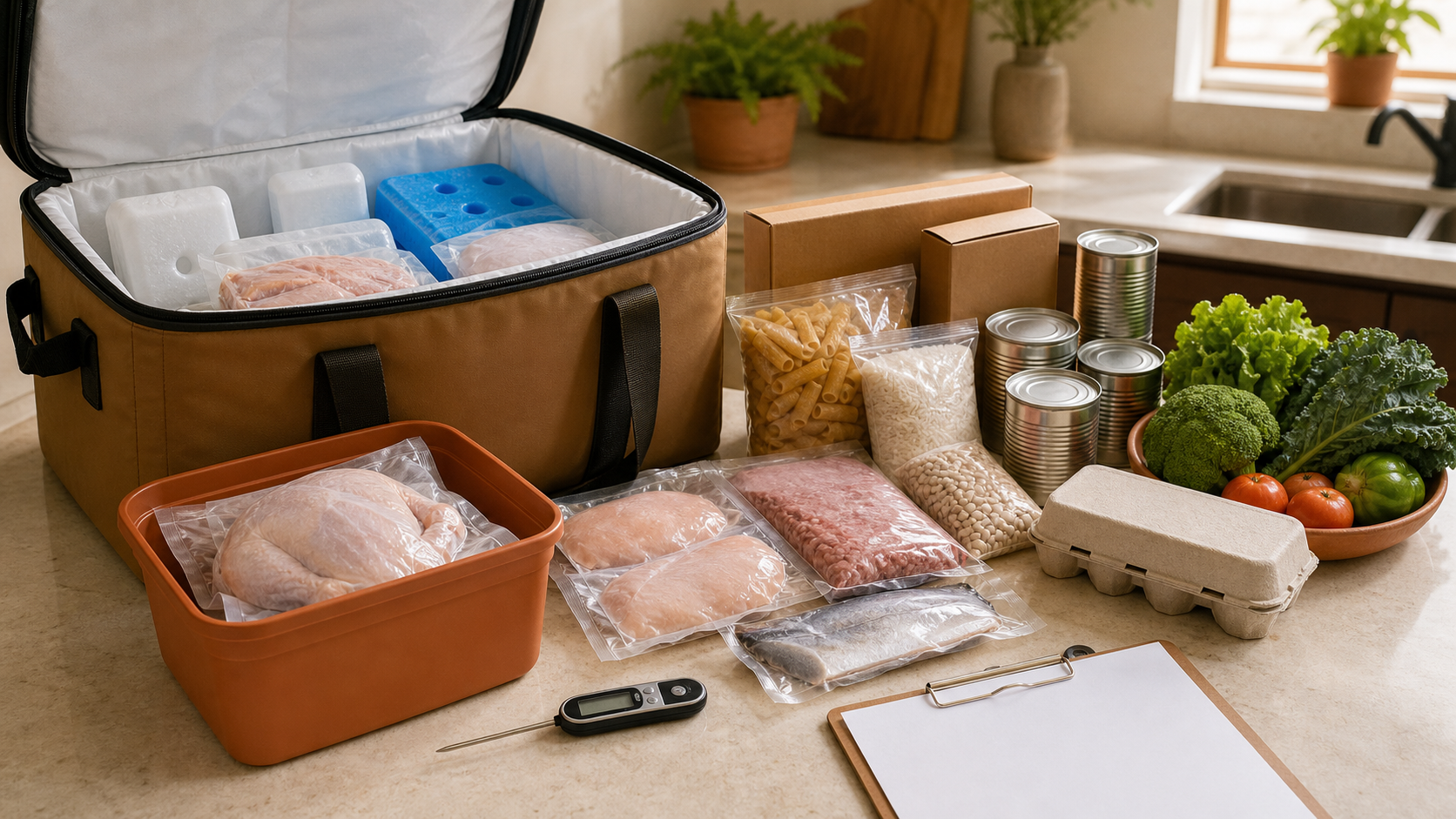
A delivery can match your shopping list and still be wrong for the kitchen. The chicken may arrive warmer than your receiving rule allows, a can may be badly dented at the seam, or the supplier may have substituted a sauce whose ingredients no longer match your menu record. Once those items are mixed into storage, the decision becomes harder to reconstruct.
This guide will help you build one receiving routine for grocery pickup, local supplier drops, and shipped perishables. You will confirm the source, prepare storage before arrival, inspect packages, measure foods that need temperature control, accept or reject each item, and keep a short record that connects the ingredient to the next production batch.
Receiving rules vary by food, source, facility, and jurisdiction. The FDA Food Code is a model used by regulators, not one universal rule for every home seller. Confirm the approved sources, temperatures, records, and rejection process required by the authority responsible for your operation before using this workflow.
Schedule the delivery when you can inspect it
Do not let a box of perishable food wait on a porch while you are shopping, cooking, or making pickups. Give every expected delivery a person, time window, and clear receiving place. If you collect groceries yourself, treat the return to your kitchen as the receiving moment rather than leaving bags in the vehicle.
Before the food arrives:
- Clear and clean a well-lit inspection space.
- Make room in the refrigerator and freezer without blocking airflow.
- Have the purchase order, ingredient specifications, and accepted brand list available.
- Prepare a clean, accurate thermometer using the procedure appropriate for the foods and packages.
- Put the receiving log and a pen beside the inspection area.
- Know how you will isolate an item while a rejection or refund is resolved.
The Institute of Child Nutrition’s receiving-deliveries guidance recommends inspecting deliveries during operational hours, comparing the invoice with what arrived, and transferring accepted food to storage promptly. Its material is written for school nutrition programs, but the preparation sequence is useful for a small seller.
Confirm the source and the exact order
Start with who supplied the food. In the FDA model, food is obtained from sources that comply with law. Your local rule decides what counts as an approved source for each product and whether a grocery store, distributor, farm, processor, or other seller is acceptable.
Keep the invoice or receipt long enough to meet your record requirements and support your own traceability. Match the supplier, delivery date, item name, package size, quantity, and brand or product code against the order. For regulated products such as shellfish, milk, eggs, meat, or poultry, keep any tags, marks, or records your authority requires.
Do not treat a substitution as a harmless duplicate. A different seasoning, sauce, bread, stock, or packaging size can change ingredients, allergens, yield, cost, storage, and preparation instructions. Pause the item until you have compared its current label with the approved recipe and the food-allergy ingredient record. If it does not fit the menu, reject it or remove it from that production plan.
Inspect the delivery before opening everything
Look at the vehicle, insulated tote, shipping carton, and individual packages before the food spreads across the kitchen. The Minnesota Department of Health receiving guide tells food businesses to check for contamination, leaking or damaged containers, pests, and cans with severe seam or rim dents, swelling, or pitted rust.
Use a consistent scan:
- Outer condition: Is the box dry, intact, and free of dirt, pests, chemicals, or unexplained stains?
- Separation: Are raw animal foods contained away from ready-to-eat food and produce?
- Package integrity: Are seals closed, cartons dry, cans sound, and frozen bags free from tears or leaks?
- Product identity: Is this the brand, size, and food you ordered, with required labels still present?
- Quality and history: Is there thawing, refreezing, discoloration, off odor, spoilage, or another condition that makes the history questionable?
Do not taste a questionable item to decide whether it is safe. Keep rejected food separate from accepted inventory so it cannot be used by mistake while you contact the supplier.
Check receiving temperatures with the right rule
Temperature is a decision at the door, not something to discover after storage. The current FDA Food Code receiving section uses 41°F or below for most refrigerated time/temperature control for safety food in the model, requires food labeled and shipped frozen to be received frozen, and says received food should be free of evidence of previous temperature abuse.
Those statements are a model baseline, not a universal chart. The model itself gives different receiving conditions for certain products, including raw shell eggs, milk, and shellfish, and a jurisdiction may adopt or modify the provisions. Write the controlling requirement beside each ingredient category rather than putting one number at the top of the form.
Follow your regulator’s and thermometer manufacturer’s method for the exact package. Use a clean, sanitized probe suitable for the food and avoid puncturing sealed packaging unless the approved method requires it. Measure a representative product, not only the delivery vehicle’s air display or the outside of the shipping box. Record the food, time, reading, device ID, and decision immediately.
USDA’s consumer guidance for mail-order perishable food uses a colder 40°F reference, advises opening the parcel promptly, and says not to consume or taste perishable food that arrives warm. That helps when evaluating groceries shipped to a home, but it does not replace the business rule adopted for your operation.
Make an accept, hold, or reject decision
Do not put every problem into the refrigerator and promise to decide later. Give the receiver three defined outcomes:
- Accept: The source, product, package, temperature, quantity, and label meet the written specification.
- Hold apart: The item remains protected and clearly segregated while an authorized person resolves a documented question. Use this only when your approved procedure allows it.
- Reject: The source is not approved, the item is wrong, the package is compromised, the required temperature is not met, or the food shows evidence of contamination or temperature abuse.
Write the rejection rule before the delivery. Include who contacts the supplier, where the item waits, whether the driver takes it back, what evidence is recorded, and how the refund or replacement enters the order record. A credit on the invoice does not make questionable food usable.
Imagine a delivery with sealed chicken, cold slaw ingredients, canned beans, and a substituted sauce. The chicken passes the required receiving check and its package is intact. The produce is clean, protected, and matches the order. One can has a severe dent at the seam, so it is rejected. The sauce is held apart until its label is compared with the recipe; when the allergen profile does not match an accepted special order, it is rejected for that menu. Each decision is visible before storage begins.
Move accepted food into storage in a fixed order
Receiving is not finished when the invoice is signed. Transfer accepted food out of the receiving area promptly. The ICN guidance prioritizes refrigerated food, then frozen food, then dry storage. Adapt that order to your approved process and the condition of the delivery.
Move cold ingredients directly into the mapped plate-sale refrigerator system, with raw animal foods contained below ready-to-eat food. Move frozen products into the assigned freezer space without blocking airflow or losing the package identity. Put dry goods on clean approved shelving, away from the floor, moisture, chemicals, pests, and household clutter.
Do not start thawing a frozen ingredient simply because the freezer is full. Reduce the order, create approved capacity, or use the documented safe thawing schedule when production actually requires it.
Keep a receiving record that helps the next step
A short log should tell you what entered the kitchen and what did not:
| Date and time | Supplier | Item and lot or code | Condition and temperature | Decision | Storage or action | Initials |
|---|---|---|---|---|---|---|
| Aug. 16, 10:15 a.m. | Approved supplier | Chicken, case A | Packages intact; required check passed | Accept | Raw bin, lower refrigerator zone | AB |
That row is an example, not a substitute for the records your product requires. Add invoices, shellstock tags, recall information, or other identifiers when the governing rule calls for them. Record substitutions and credits too, so purchasing, allergen review, recipe yield, and food cost stay connected to the product actually used.
Before the next order arrives, confirm seven points:
- Source: The supplier and product are allowed for your operation.
- Timing: Someone is present with space and tools ready to inspect.
- Identity: The delivery matches the order and approved ingredient specification.
- Condition: Packages are intact and protected from contamination.
- Temperature: Foods that require control meet the applicable receiving rule.
- Decision: Every item is accepted, held apart under procedure, or rejected.
- Storage: Accepted food moves promptly into its correct refrigerator, freezer, or dry zone.
Start with the ingredient that creates the biggest consequence when it is wrong—often a raw protein, dairy item, or multi-ingredient sauce. Write its source, package, temperature, substitution, and rejection checks on one receiving line. The Selling Plates guide can help connect that routine to the wider menu, pricing, order, and sale-day system so a delivery becomes verified inventory instead of an unchecked pile of bags.
Ready to move?
Turn the research phase into your first sale.
The guide brings pricing, menu planning, marketing, and setup into one clear playbook.
Get the guide on Gumroad