How to Organize Dry Storage for Plate-Sale Prep
Organize dry storage for plate-sale prep with protected shelving, clear ingredient identity, allergen separation, stock rotation, and weekly counts.
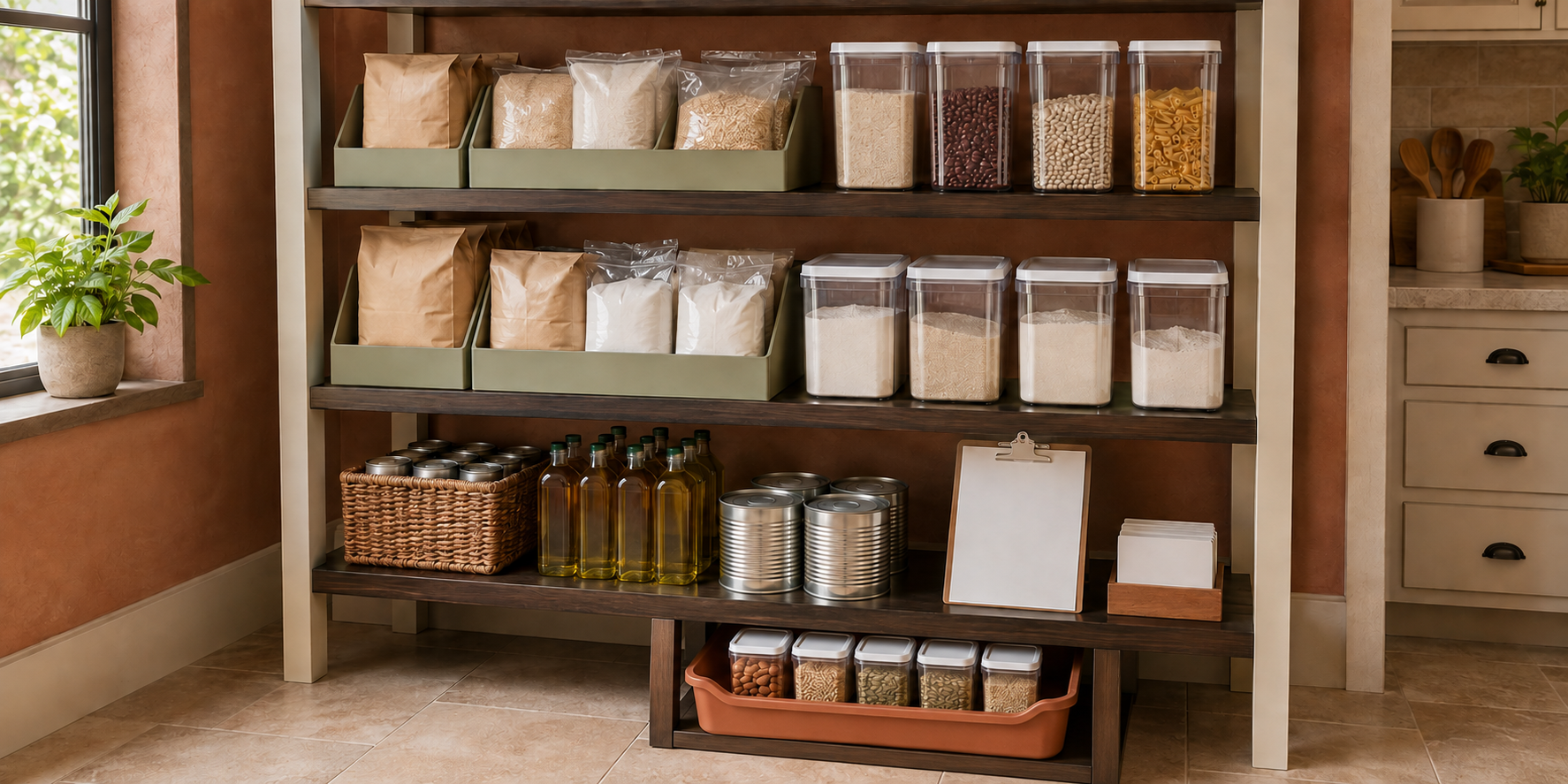
A bag of rice can be shelf-stable and still become unusable. The package may lose its identity after it is poured into a bin, an older bag may disappear behind a new case, a leaking oil bottle may soil the shelf, or pantry pests may spread before the next menu drop. When dry storage is treated as spare household space, the production count is never quite trustworthy.
This guide will help you turn an approved pantry or dry-storage area into a working ingredient system. You will map the shelves, preserve package identity, protect opened stock, separate allergen-containing ingredients, rotate what you own, inspect for damage or pests, and build a count that feeds the next purchase list.
Dry storage does not make a product or home kitchen legal to use. The FDA Food Code is a model for retail-food regulation, and states and local authorities adopt and modify requirements differently. Verify current local requirements for the foods, facility, storage area, containers, pest-control procedure, and records allowed for your operation before putting this system into service.
Approve the space before arranging the food
Start with the room, not a set of matching containers. Ask whether this is an approved food-storage area for your product and permit. A hallway closet, garage shelf, laundry room, or cabinet under plumbing may be convenient without being suitable.
The current FDA model calls for food to be stored in a clean, dry location, protected from splash, dust, and other contamination, and generally at least six inches above the floor. It also prohibits storage in areas such as toilet rooms, garbage rooms, and beneath leaking water lines or other contamination sources. Treat those Food Code storage provisions as a planning reference, then use the rule your regulator has adopted.
Walk the proposed area at the warmest and busiest part of the day. Look for roof or plumbing leaks, condensation, direct sun, heat from an appliance, grease, dust, pet access, insect gaps, and traffic that could strike a package. Keep food and food-contact supplies away from cleaners, pesticides, fuel, paint, and other chemicals. If the area cannot stay dry, protected, and accessible for inspection, move the stock before buying shelving.
Give every shelf one job
Draw a simple shelf map. The purpose is not to make the pantry photogenic; it is to make the correct ingredient easy to find without moving five unrelated packages.
A small setup might use these zones:
- Unopened staple zone: intact rice, pasta, flour, canned goods, and other accepted packages.
- Opened working-stock zone: closed food-safe containers used for current recipes.
- Oil and liquid zone: upright, stable bottles in a washable catch tray.
- Allergen-control zone: clearly identified, securely closed ingredients placed according to the operation’s cross-contact plan.
- Hold zone: damaged, questionable, changed, or recalled stock that must not enter production.
Keep the hold zone physically distinct and mark its status so a helper cannot mistake it for ready stock. Do not use a grocery bag on the floor as a temporary overflow zone. When the approved shelves are full, reduce the order or purchasing quantity instead of hiding cases where they cannot be inspected.
The food-delivery receiving workflow should end at one of these named locations. That connection prevents a package from being accepted at the door and then losing its condition, supplier, or lot information on the way to the pantry.
Preserve the ingredient’s identity
An unmarked white powder is not a usable inventory record. Keep the original package with the ingredient whenever practical because it carries the common name, ingredient statement, allergen declaration, storage directions, supplier details, lot or package code, and manufacturer date information.
If you transfer food into a working container, identify it with at least the common food name required by your adopted rule. Also preserve the original package or record that connects the container to the supplier, lot or package code, receipt date, and relevant directions. Add the date opened or transferred when that helps your rotation procedure.
Do not treat a handwritten date as permission to ignore the package. USDA FSIS explains that not every canned or packaged food is shelf-stable; some products carry a “Keep Refrigerated” direction, and storage can change after opening. Inspect cans for swelling, leaks, heavy rust, or deep dents, and follow the manufacturer and regulator rather than inventing one shelf life for every dry item.
When a supplier changes a formula or allergen statement, stop and compare the new package with the recipe record before combining it with older stock. A container that held the previous version should not silently erase that change.
Choose protection for the ingredient, not the look
Use a container documented for food contact and the ingredient’s actual storage condition. It should be clean, dry, sound, easy to close, and large enough to hold the intended quantity without forcing the lid. Do not repurpose a chemical bucket or an unidentified decorative canister.
Keep the ingredient covered between uses. If the original inner bag offers useful moisture or package protection, place the closed bag inside a lidded bin rather than automatically pouring it out. When you do transfer food, empty and clean the container under the approved procedure before adding a new lot. Topping a new bag onto old remnants hides age, condition, and traceability.
Scoops need their own safe procedure. Do not leave a handle buried in food or reach into a bin with a cup from another ingredient. Store the approved utensil protected from contamination, and keep it dedicated where cross-contact is a concern.
Separate allergen-containing ingredients deliberately
Allergen control cannot depend on remembering which tan powder contains milk or which flour blend contains wheat. Keep the complete ingredient label available, identify the storage container, close it securely, and give it a defined place.
FDA’s allergen cross-contact prevention guidance recommends considering dedicated storage areas or shelves, securely closing allergen containers, and placing allergen-containing ingredients below non-allergen ingredients when dedicated space is unavailable. The document also says these are facility-specific recommendations, not requirements that fit every operation.
Build the arrangement with your regulator and the specific foods you accept. A catch bin can contain a leak, but it cannot make an allergy order risk-free. Route customer requests through the food-allergy order decision and never promise that a meal is allergen-free simply because the pantry looks separated.
Rotate stock and buy from a real count
At a fixed time before each menu drop, count what is usable—not merely what is visible. Check the item, package or container, lot or supplier record, opened status, package direction, quantity remaining, and condition. Stock in the hold zone does not count toward production.
Move older accepted stock forward and place newer stock behind it. Penn State Extension describes first-in-first-out rotation and batch records as useful inventory controls. FIFO is a physical workflow, not a slogan: if the oldest rice requires three other bags to be moved, the shelf design works against the rule.
Then convert paid orders into ingredient need using the tested quantity in each standardized recipe:
Required quantity − usable on-hand quantity = quantity to purchase
Suppose 24 paid orders require 12 pounds of rice. The shelf count finds one intact 5-pound bag and 3 pounds in an identified working container, so the usable total is 8 pounds. The purchase need is 4 pounds, adjusted only for the package size and documented buffer your operation actually uses. The figures are an example, not a purchasing benchmark.
EPA recommends inventorying supplies and buying only what is needed as source-reduction steps. Connect the count to your food-waste log: repeated expired spices or half-used specialty ingredients are signals to change the menu, package size, or purchasing rule.
Inspect the area and act on pantry pests
Build a short visual inspection into receiving, weekly counting, and cleanup. Look for broken seals, holes, webbing, larvae, beetles, moths, spilled flour, moisture, droppings, and packages that have softened, swollen, leaked, or changed condition.
University of Minnesota Extension notes that many dried foods can be infested by pantry pests, including flour, rice, pasta, beans, nuts, dried fruit, spices, and powdered milk. Its guidance recommends inspecting packages, using older and opened food first, keeping suitable products in tightly closed glass, metal, or heavy-plastic containers, and cleaning crumbs and spills promptly.
If you find an infestation, stop moving packages through production. Isolate the affected area, discard infested food under the appropriate procedure, inspect other susceptible products, and clean the storage space. Do not spray household insecticide near food and call the problem solved; Extension warns that pesticides do not remove insects inside packages and food that contacts insecticide must be discarded. Bring in qualified pest help and notify the regulator when your plan requires it.
Run a dry-storage release before the next sale
Use this seven-point check before ingredients enter the production schedule:
- Permission: The food, room, shelves, and containers meet the current local requirement.
- Protection: Stock is clean, dry, closed, elevated, and away from splash, chemicals, heat, pests, and other contamination.
- Identity: Every item connects to its common name, original label, supplier or lot record, and storage direction.
- Separation: Allergen-containing ingredients and hold stock have controlled, unmistakable locations.
- Rotation: Older and opened acceptable stock is accessible before newer inventory.
- Condition: Damaged, leaking, infested, recalled, or questionable food cannot enter the usable count.
- Quantity: Paid orders and tested recipes determine the purchase list.
Start with the dry ingredient used in your highest-volume plate. Trace it from the accepted package to its shelf, working container, recipe batch, and remaining count. Fix every point where its identity or condition can disappear. The Selling Plates guide can help connect that storage record to the menu, pricing, ordering, and sale-day plan around it.
Ready to move?
Turn the research phase into your first sale.
The guide brings pricing, menu planning, marketing, and setup into one clear playbook.
Get the guide on Gumroad